



Tire Covers & Protectors

Why Tire Covers and Protectors Matter for Your Trailer
When your trailer, RV, or camper sits parked between trips, its tires face a relentless threat from the environment. UV rays, ozone, moisture, and extreme temperatures are the primary culprits behind premature tire degradation — and unlike engine components, tires often deteriorate silently before the damage becomes obvious. Tire covers and protectors are the front line of defense, shielding your investment from the elements every day your rig is not on the road.
The Science Behind Tire Deterioration
Rubber is naturally vulnerable to environmental breakdown. Sunlight damages tires by breaking down rubber molecules, making the rubber brittle and causing cracks to form, while ozone directly attacks the tire surface. UV rays, ozone, and high temperatures are considered the three primary environmental tire killers, and exposing tires to heat and sun without protection can significantly shorten their useful lifespan. In fact, a tire's effective age can accelerate with every meaningful increase in surface temperature — a metric that changes dramatically depending on whether a tire is covered or exposed to direct sunlight.
The risk doesn't apply only to your running tires. Your spare tire is equally exposed to the elements, yet it's the one you'll be counting on in an emergency. A dried-out, cracked, or dry-rotted tire should never be used as a spare — and a tire cover is one of the simplest ways to keep it ready for action when you need it most.
What Tire Covers Protect Against
- UV Radiation: Blocks harmful sunlight that breaks down rubber compounds and accelerates cracking and fading.
- Dry Rot: Reduces the oxidation process that causes sidewalls to crack and become structurally unsound.
- Moisture & Weather: Guards against rain, snow, ice, and road salt that can corrode wheels and degrade rubber over time.
- Debris & Road Grime: Protects tires mounted externally from dirt, dust, and debris thrown up during travel or storage.
- Heat Buildup: Lighter-colored covers reflect solar heat, helping keep tire surface temperatures significantly lower than those on uncovered tires.
- Wheel & Brake Corrosion: By enclosing the wheel assembly, quality covers also help prevent lug nuts and brake components from rusting during storage.
Types of Tire Covers to Consider
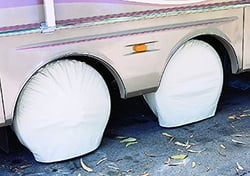
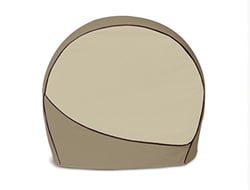
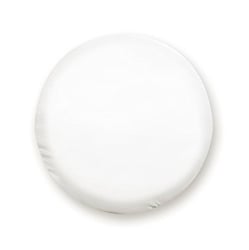
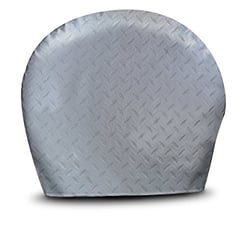
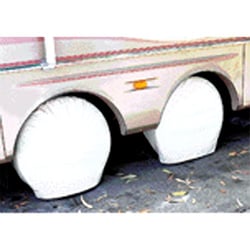
Tire covers come in several styles tailored to different needs. Single-axle covers are the most common, designed to fit over individual tires, while tandem or dual-axle covers wrap around two adjacent tires with a single cover — ideal for trailers with closely spaced axles. Spare tire covers are designed for rear-mounted or hitch-mounted spares on trucks, SUVs, and trailers, and often come in a wide range of decorative designs as well as plain protective styles.
Material matters significantly when choosing a cover. Soft vinyl covers are widely available and provide a baseline of UV and weather protection, though heavier multi-layer constructions — often combining a waterproof outer shell with a soft, non-scratch inner lining — offer more durable long-term performance. Hard covers made from rigid ABS plastic are the most durable option but come at a higher cost. Look for features like elastic hems, adjustable straps, windproof closure systems, and sealed seams to ensure the cover stays securely in place and keeps moisture out.
Getting the Right Fit
Proper sizing is essential — an ill-fitting cover can flap in the wind, trap moisture, or simply fall off. To find the right size, locate the tire code printed on the sidewall of your tire and match it to the cover's sizing chart. If the code isn't visible, measure the outer diameter of the tire from tread to tread. Most manufacturers offer covers in a range of standard sizes, typically spanning from around 27 inches up to 35 inches in diameter and beyond, so there's a fit available for everything from lightweight utility trailers to large Class A motorhomes.