



Accumulator Tanks




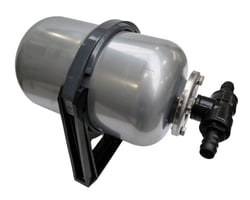

What Are Accumulator Tanks?
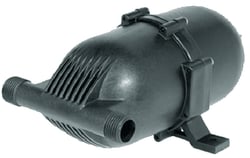
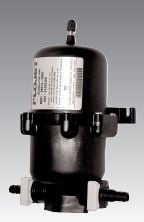
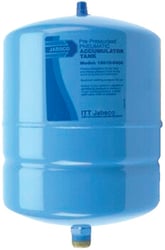
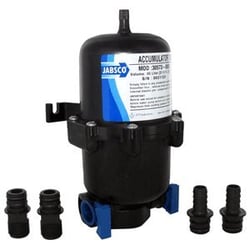
If you've ever been on a boat and noticed the water pump clicking on and off every time someone briefly opens a faucet, you've experienced a freshwater system without an accumulator tank. Accumulator tanks are small pressurized vessels installed in the freshwater plumbing between the pump and the faucets. Inside, a rubber bladder or diaphragm separates a pre-charged air chamber from the water side of the system. When the pump fills the bladder with water, the trapped air compresses — and that stored pressure is what delivers water smoothly to your faucets, showers, and fixtures, even when the pump itself isn't running.
Why Accumulator Tanks Matter
Without an accumulator tank, a marine pressure water pump responds to even the smallest draw — rinsing hands, filling a glass — by cycling on and off rapidly. This constant start-stop wear shortens pump life, drains battery power, and creates unwanted noise below deck. An accumulator tank acts as a buffer, absorbing those short demands from its stored pressure reserve so the pump only kicks in when pressure genuinely drops below its cut-in threshold.
The benefits are tangible across every system on board:
- Reduced pump cycling — the pump runs less frequently, protecting the motor and pressure switch from premature wear
- Consistent water pressure — steady flow at every tap, even when multiple outlets are open simultaneously
- Quieter operation — less on/off switching means a noticeably calmer cabin environment
- Even shower temperatures — stable pressure means less fluctuation in hot/cold mix when water demand changes
- Battery conservation — fewer pump start cycles translates directly to lower energy consumption
How to Choose the Right Accumulator Tank
Sizing is the most important variable when selecting an accumulator tank. As a general rule, a larger tank delivers more drawdown capacity — the actual usable water volume stored under pressure — which means longer intervals between pump cycles. The tank's air pre-charge pressure should be set to match the pump's cut-in pressure (typically around 20 PSI) to prevent waterlogging and maximize efficiency. Tank construction also matters: models are available in plastic, painted steel, and stainless steel, each suited to different installation environments and budgets. Higher-quality tanks feature replaceable bladders, allowing for long-term serviceability rather than full unit replacement.
Installation is straightforward — accumulator tanks are typically mounted on the discharge side of the pressure water pump and can often be positioned in any orientation to suit tight bilge spaces.
Top Brands in Accumulator Tanks
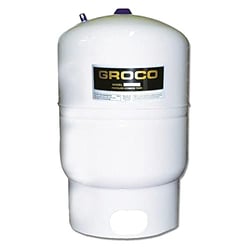
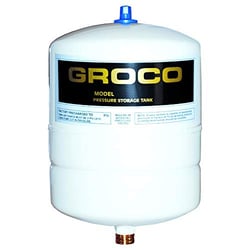
Groco is a go-to name in marine freshwater plumbing, and their PST Series pressure storage tanks are a benchmark product in this category. Groco's PST tanks use a pneumatic pressure charge matched to the pump cut-in pressure, with a rubber bladder to prevent waterlogging, and are engineered for both fresh and saltwater use. Their tanks can be mounted in any position — including upside down — making them highly adaptable to the space constraints common in boat installations.