



Binding Lubricants

What Are Binding Lubricants?
If you've ever wrestled your feet into a tight pair of wakeboard boots or water ski bindings on a hot summer day, you already understand the value of a good binding lubricant. These specially formulated gels and creams are applied to the opening of your bindings to reduce friction, letting your foot slide in smoothly and seat properly — without the struggle or the wasted time on the water.
Binding lubricants are purpose-built for watersports. They work for all types of board and ski bindings, from open-toe wakeboard setups to snug closed-toe boots and slalom ski bindings. A quality lubricant provides just enough slip to get in cleanly, yet doesn't leave your foot sloshing around once you're in — the right consistency keeps things snug once you're strapped up.
Why Not Just Use Dish Soap?
Many riders default to household dish soap or other improvised slick agents to get into their bindings. While soap might seem like a convenient shortcut, it comes with real drawbacks. Binding lubricants specifically engineered for watersports are a smarter choice for several key reasons:
- Binding protection: Detergents and soaps can dry out the neoprene and rubber materials in your bindings over time, shortening their lifespan.
- Skin comfort: Soap can dry and crack the skin on your feet with repeated use, while dedicated lubes are gentler and often moisturizing.
- Environmental safety: Lakes and waterways are sensitive ecosystems. Quality binding lubricants are formulated to be eco-friendly and safe for aquatic environments, whereas soaps and detergents are not.
- Better consistency: A proper binding lube is thick enough to cling to the top of your binding opening without dripping away before your foot goes in — something watery soap solutions simply can't match.
What to Look for in a Binding Lubricant
When shopping for a binding lubricant, consider the formula first. Natural or kelp-based formulas are popular because they offer the ideal thickness and are environmentally responsible — they dissipate quickly in water without harming marine life. Look for products that are explicitly labeled as safe for neoprene, rubber, and synthetic binding materials. Packaging also matters: a squeeze bottle or tub is easy to keep in your boat's gear bag and apply quickly dockside.
Top Brands in Binding Lubricants
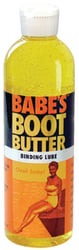
When it comes to trusted names in this niche category, Babe's Boat Care stands out as the go-to choice for serious watersports enthusiasts. Their flagship Boot Butter product is a kelp-based binding lubricant engineered specifically for wakeboard and water ski bindings, delivering the perfect consistency to ease entry while remaining safe for your feet, your gear, and the waterways you love. Babe's Boat Care has built a strong reputation across the marine and watersports community for formulating products that perform without compromising environmental responsibility.