



Cutlass Bearings
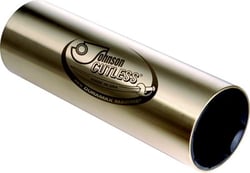

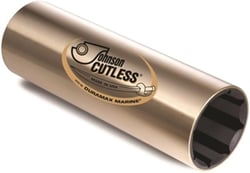
What Are Cutlass Bearings?
Just before a propeller shaft meets the propeller, it passes through a bearing known as the cutlass bearing, which supports the shaft and helps it rotate smoothly. Though the name may conjure images of a pirate's sword, the name "cutless" is actually derived from the "cut-less" design of these bearings, which enables small particles to pass through grooves in the bearing without cutting or wearing the rubber surface.
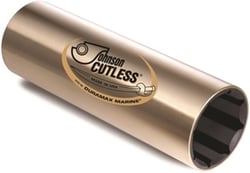
Cutlass bearings are tube-shaped and typically made from bronze, marine-grade brass, or stainless steel, and are lined with nitrile rubber. The rubber is grooved where it meets the propeller shaft to enable water to pass through the grooves in order to lubricate the bearing. This water-lubricated design means there are no greases or oils to maintain — the surrounding water does the work for you.
How They Fit Into Your Drivetrain
The engine and reduction gear sitting on engine mounts comprise the vessel's drivetrain, which is connected to the propeller shaft via a shaft coupling. The shaft then runs out from the engine room to the bottom of the boat through a shaft seal. Before the shaft meets the propeller, it is supported by one or more struts — the rigid supports that keep the shaft aligned with the engine and transmission. The cutlass bearing lives inside those struts, cradling the rotating shaft.
The bearing is usually located in a strut or bracket suspended from the hull, or in traditional deep-keeled vessels may be enclosed in the deadwood part of the stern through which the propeller shaft passes.
Why Cutlass Bearing Material Matters
Water-lubricated bearings come in either marine bronze or phenolic housings — phenolic bearings are corrosion resistant and therefore suitable for mixed-metal environments where cathodic action could occur. The inner rubber lining plays an equally important role: the internal design of the rubber surface can be axial, spiral, or helical, with one or more right- or left-hand principles, according to the shaft rotation, to help water in its action of lubrication and cooling of the shaft.
The water-lubricated mechanism activates a powerful pumping action that keeps the bearing cool and clean, significantly reducing frictional heat and wear, which is critical for maintaining the efficiency and longevity of the marine bearing system in severe conditions.
Signs of Wear & When to Replace
Cutlass bearings can last for many years, but if the propeller shaft is out of alignment they will wear through more quickly. If you have noticed a clunking sound when motoring, it could be a worn cutlass bearing that is causing the problem.
A bad cutlass bearing and loose propeller shaft can lead to problems such as reduced efficiency or, more seriously, vibration of the propeller shaft that can seriously damage your shaft seal, gearbox bolts and couplings, engine mounts, and may even cause you to lose your entire propeller shaft. As long as there is no play or lateral movement of the propeller shaft while in the bearing, the cutlass bearing should still be good. However, if you notice some movement or "wiggle" of the shaft in the bearing of more than 1/16th of an inch, you should strongly consider changing your bearing.
Choosing the Right Cutlass Bearing
Selecting the correct cutlass bearing requires matching three key dimensions: the shaft diameter (inner bore), the outer diameter to fit your strut housing, and the length. Precision-fitted diameters matched to the designated shaft size with the correct clearance are essential for efficient water lubrication. When in doubt about your application — strut-mounted, stern-tube, or rudder stock — always verify the existing bearing's dimensions before ordering a replacement.