



Personal Marker/Floatation/Strobe Lights

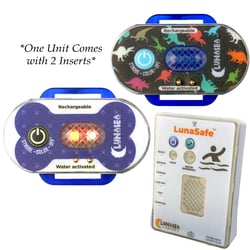
Lunasea Lighting LLB-63BB-F0-K2 Child/Pet Safety Water Activated Strobe Light with RF Receiver - Blue




What Are Personal Marker, Flotation & Strobe Lights?
When someone goes overboard or finds themselves in a water emergency, seconds matter. Personal marker lights, flotation strobe lights, and PFD rescue lights are compact, waterproof signaling devices designed to make a person in the water visible to rescuers — at night, in rough seas, and in poor visibility conditions. Emergency strobe lights allow for a bright light in all directions to cut through the darkness of the ocean at night and catch the attention of rescue parties and response personnel.
Compact and durable, personal strobe lights are ideal for life jackets, rafts, and survival gear, while marker lights help identify crew members and vessels in dark or rough conditions. These lights serve a critical role in any on-water safety plan — from recreational boaters and offshore sailors to commercial mariners and military personnel.
How Do They Work?
Rescue lights can be attached to life jackets and come on automatically when they contact water, or start with a manual switch. Lights offer a continuous beam or strobe for maximum visibility in the water. The best models combine multiple activation modes for redundancy, ensuring the light activates even if the wearer is incapacitated.
Modern personal strobe technology has advanced dramatically over the years. The advantage of using LEDs is they use a fraction of the power, are programmable to flash at specific intervals or illuminate constantly, making them ideal for a waterproof strobe light with additional features. Waterproof personal rescue lights offer up to 120 hours of strobe light signals and some work submerged up to ten feet.
Key Features to Consider When Shopping
- Activation Method: There are both manually-activated and water-activated options, as well as steady light and strobe light options. Water-activated models offer hands-free, automatic deployment in an emergency.
- Certifications: Always look for USCG and/or SOLAS approval. It is always advisable to make sure that the product does have a certification from either the USCG or SOLAS.
- Operating Life: Lights attached to a PFD can run as long as 120 hours with visibilities up to 3 miles. Longer battery life is critical for offshore or remote water activities.
- Mounting Compatibility: Snap clips attach lights to PFDs and some lights boast rounded corners to protect inflatable life jackets from damage.
- Visibility Range: The best units provide bright, 360° visibility for approximately 2 miles or more, ensuring rescuers can locate you from a distance.
Top Brands in Personal Marker & Strobe Lights
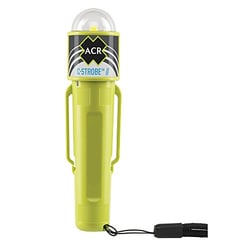
ACR Electronics is the undisputed leader in this category. Beginning in the 1950s, ACR Electronics made a name for itself as a leading manufacturer of high-quality strobe lights for the marine and aviation industries. Through government projects, the Fort Lauderdale, FL-based company involved itself with research and development of marine and aviation rescue and survival items, including EPIRBs, personal utility lights, marker lights, and safety accessories. Today, ACR's lineup — including the C-Strobe, HemiLight, Firefly PRO, and SM-3 Lifebuoy Marker Light — represents some of the most trusted, rigorously certified rescue lighting available to both recreational and commercial mariners.