



ComNav Steering Parts & Accessories

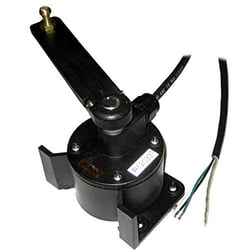
ComNav Steering Parts & Accessories for Marine Autopilot Systems
When a vessel spends hours on a fixed heading, the quality of its steering electronics matters as much as the engine or the hull. ComNav, a Canadian marine electronics designer founded in 1982 and based in Richmond, British Columbia, is best known for autopilots, and its steering-related components reflect that heritage. This page focuses on ComNav's contribution to Steering Parts & Accessories, where autopilot hardware, control units, and supporting components keep a boat tracking accurately in changing conditions.
Intelligent Steering Technology at the Core
ComNav's autopilot models are built around what the company calls intelligent adaptive steering technology (IST). Rather than applying a fixed response, IST learns how a particular vessel behaves at sea and tunes the autopilot's response to suit. In the P Series, the adaptive software adjusts key steering parameters for factors such as speed, trim, drift, currents, roll, pitch, and wind. For anyone adding or replacing autopilot components, this is the logic that the control head, sensors, and drive interfaces all work together to support.
Product Lines You May Encounter
ComNav's steering lineup spans a wide range of vessel sizes and uses:
- P4 Autopilot: aimed at mid-size and larger boats, with automatic leeway compensation for drift, tide, and wind, plus an auto-setup routine that learns rudder response time and detects and calibrates the compass.
- P2 and P2VS Autopilots: navigation-capable models that use GPS track information for adaptive, precise track steering.
- 2001 Autopilot: a fixed-station unit designed for larger vessels, with ten selectable steering parameters, dodge buttons, and compatibility with most steering system types.
- 1001 and 1420 Series: proven fixed-station designs with ten selectable steering parameters and rotary feedback options, along with supporting items such as control units, heading sensors, and distribution boxes.
Compatibility and Build Quality
One of the practical concerns when shopping for steering accessories is whether a component will integrate with what is already on board. ComNav designs its autopilots to work with industry-standard NMEA 0183 and NMEA 2000 networks, and the company states they are compatible with most steering systems. Its current autopilot models are rated to IP67 waterproof standards and meet CE requirements, with IMO compliance and Wheelmark registration on applicable models. Features such as multi-station capability with a station lock, port and starboard dodge buttons, and sunlight-viewable displays on the P Series make the systems practical for working helms as well as leisure cruising.
Why ComNav Has a Following
ComNav autopilots have been specified on ferries, workboats, fishing vessels, and coast guard and naval vessels, as well as recreational power and sail boats. The company is ISO 9001 registered, and its autopilots come with an extended three-year warranty. That combination of commercial-grade duty cycles and recreational usability is what draws boat owners and professional operators to the brand.
Shopping Tips
- Match the model to your vessel type and length, since parameter presets differ for displacement hulls, planing hulls, sailboats, and stern drives.
- Confirm whether your system needs rotary feedback, a magnetic compass sensor, or a separate heading sensor.
- Check network requirements (NMEA 0183 versus NMEA 2000) so the autopilot can share data with your existing instruments.
To see everything the manufacturer offers beyond steering, visit the ComNav brand page.