



VHF Recreational 2-Piece Antennas

What Are VHF Recreational 2-Piece Marine Antennas?
A VHF marine antenna is far more than a simple piece of hardware bolted to your boat — it's the critical link between your radio and the outside world. VHF (Very High Frequency) antennas operate on the marine band between 156 and 162 MHz, transmitting and receiving the voice calls, weather broadcasts, and distress signals that keep boaters safe and connected on the water. As one marine radio expert put it, even the best radio in the world won't perform at its optimum if connected to the wrong antenna.
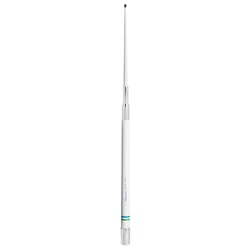
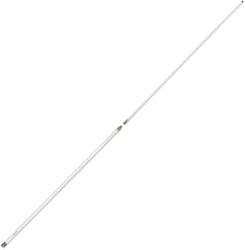
Two-piece antenna designs are particularly popular among recreational boaters because they offer a practical balance of performance and manageability. Longer antennas deliver higher gain, which concentrates the radiated signal closer to the horizon for greater range — but a single-piece antenna over 10 feet can be cumbersome to transport and store. A 2-piece design solves this by splitting the antenna into two sections that join securely at a threaded ferrule, making installation, removal, and transport significantly easier without sacrificing signal quality.
Why Antenna Choice Matters on the Water
VHF radios operate on a line-of-sight principle, meaning signals travel in a nearly straight path and don't bend around obstructions or over the horizon. This makes antenna height and quality the dominant factors in determining how far your radio will reach. With the right antenna setup, a quality marine radio can send and receive VHF signals over line-of-sight distances of 50 miles or more in favorable conditions.
Antenna gain — measured in decibels (dB) — describes how the antenna focuses its radiated energy. Higher gain pushes the signal closer to the horizontal plane, which is ideal for flat-water powerboating, while lower gain spreads the signal pattern more broadly, which benefits sailboats that heel and roll. For recreational powerboats, a 6dB gain antenna is a common sweet spot, delivering meaningful range improvement over basic 3dB options.
The materials inside the antenna matter just as much as its external form. Premium antennas use brass and copper radiating elements, which deliver the greatest electrical efficiency, while budget models may rely on coaxial cable alone. Stainless steel or chrome-plated brass ferrules provide corrosion resistance at the critical connection point, ensuring the two sections of a 2-piece design mate securely for years of use in saltwater environments.
Key Considerations When Shopping
- Gain (dB): Match gain to your vessel type — 3dB for sailboats and rolling conditions, 6dB or higher for powerboats on calmer water.
- Construction materials: Look for brass and copper elements with stainless steel or chrome-plated brass ferrules for maximum efficiency and durability.
- Mounting height: Install the antenna as high as practically possible — elevation directly extends line-of-sight range.
- Coax cable quality: Use RG-58 for runs under 20 feet; upgrade to low-loss RG-8X or RG-213 for longer cable runs to minimize signal loss.
- Support clamps: Two-piece antennas over 10 feet in length require an upper support clamp to prevent structural failure.
- Maintenance: Rinse with soap and water regularly and inspect ferrule connections for corrosion — a well-maintained quality antenna can last many years in service.
Top Brands in VHF Recreational 2-Piece Antennas
When it comes to recreational VHF antennas, one name stands above the rest. Shakespeare Antennas has been manufacturing marine VHF antennas since the early 1950s and is widely regarded as the benchmark brand for both performance and durability in the marine antenna category. Their product lineup — spanning the Classic, Galaxy, and Phase III series — covers everything from value-oriented recreational antennas to premium offshore performers, all built with the fiberglass, brass, and copper construction that serious boaters trust.