



VHF Stainless Whip Antennas
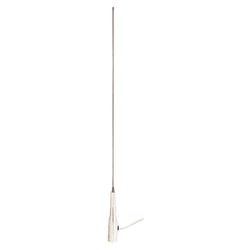

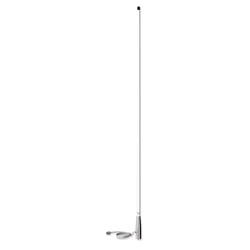
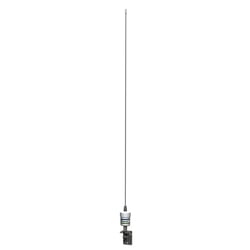
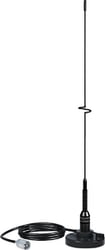
Shakespeare Antennas 5218 19" Stainless Steel VHF Marine Whip Antenna with Magnetic Mount


Shakespeare Antennas 5215-C-X 3' Stainless Steel VHF Sailboat Masthead Antenna with 60' Cable
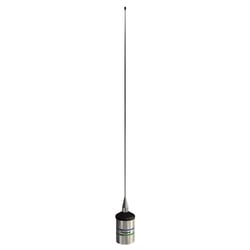
What Are VHF Stainless Whip Antennas?
A VHF stainless whip antenna is one of the most dependable tools aboard any vessel. Operating across the marine VHF band — 156.0 to 162.025 MHz — these antennas transmit and receive voice communications, weather broadcasts, distress calls, and AIS signals between boats, coast guard stations, and harbormasters. Unlike fiberglass tube antennas, stainless steel whip antennas offer a rugged, low-profile alternative that is especially well suited for masthead mounting on sailboats and for compact powerboats where physical space and wind resistance matter most.
Why Stainless Steel?
The choice of stainless steel isn't just aesthetic. When an antenna lives exposed to saltwater spray, UV radiation, and constant motion at sea, material quality makes a measurable difference in long-term reliability. Stainless steel whips resist corrosion in ways that many coated alternatives simply cannot match over years of use. Their rigidity also plays a practical role: a well-built stainless whip won't flex or lay over under wind load, keeping your signal consistent even at speed.
Because VHF radio communication is inherently line-of-sight, antenna height is critical to range. A stainless whip mounted at a sailboat masthead, for example, dramatically increases the effective range of your VHF radio compared to a deck-level installation. The internal construction matters too — quality antennas use sealed coil chambers and tin-plated or solid copper wire to guard against moisture intrusion that can degrade performance over time.
Key Considerations When Choosing a VHF Stainless Whip Antenna
- Gain (dB rating): Lower-gain 3 dB antennas produce a wider vertical signal beam, making them ideal for smaller, rockier boats. Higher gain collapses the beam for longer flat-water range but requires a stable platform.
- Mounting location: Masthead mounting maximizes range by elevating the antenna. Ratchet deck mounts work well for powerboats and offer flexible positioning.
- Connector type: Most antennas use standard PL-259 connectors on RG-58 or RG-8X coaxial cable. Verify compatibility with your existing radio installation before purchasing.
- AIS compatibility: Some stainless whip models include extra bandwidth to support AIS transceivers alongside standard VHF communications — a valuable feature for vessels in busy waterways.
- Ferrule construction: Metal ferrules (brass or stainless) provide superior strength at the mount point compared to nylon versions, particularly important at higher speeds or in rough conditions.
Top Brands in VHF Stainless Whip Antennas
Shakespeare Antennas is the preeminent name in marine VHF communication. Founded in 1897, Shakespeare has spent over a century refining antenna design and engineering. Their engineers pioneered low-angle radiation techniques for marine antennas in the 1960s, and subsequent milestones include hand-soldered connections, silver-plated elements, and metal ferrules built to endure harsh offshore conditions. Their Classic Series stainless whip models — including the widely recognized 5215 Squatty Body — are purpose-built for masthead use on sailboats and compact powerboats, balancing low wind resistance with reliable VHF and AIS performance.