



CV Joints

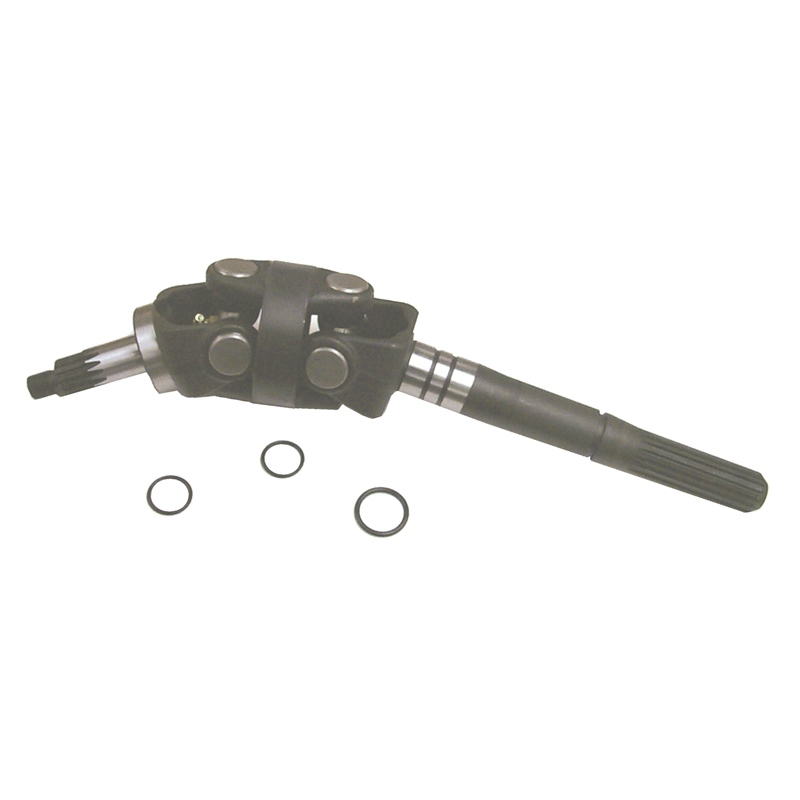 Representative Photo, actual item may vary
What Are CV Joints and Why Do They Matter?
Constant velocity joints — better known as CV joints — are one of the most critical components in your vehicle's drivetrain. CV joints are flexible mechanical couplings that connect the drive shaft to the transmission and the wheel hubs, allowing the axle to transmit torque smoothly even as the suspension moves and the wheels steer. Without them, the rotational force from your engine simply could not reach the road.
Every CV axle contains two joints: an inner joint connected to the transmission and an outer joint connected to the wheel hub. Both are engineered to flex through a range of angles and directions while maintaining a constant rotational speed — hence the name. Originally developed for front-wheel-drive vehicles, CV joints are now found across front-, rear-, and all-wheel-drive platforms alike.
Types of CV Joints
The two most widely used designs are the ball-type (Rzeppa) joint and the tripod-type joint. Ball-type joints are typically found on the outer end of FWD drive shafts, where they must accommodate a wide range of steering angles. Tripod-type joints are more common on the inner end, where they also need to telescope slightly to accommodate suspension travel. Each design uses precision-machined components — hardened steel balls, cages, and races — packed in grease and sealed inside a rubber boot.
Signs of a Failing CV Joint and Maintenance Tips
CV joints are designed to last the life of the vehicle, but their Achilles' heel is the protective rubber boot. When the boot cracks or tears, the lubricating grease escapes and moisture, dirt, and grit enter the joint. Once contamination sets in, wear accelerates rapidly and joint failure follows. Common warning signs include a clicking or popping noise during turns, vibrations at highway speed, or visible grease splattered inside a wheel well.
Routine inspections during regular maintenance visits are the best defense. A mechanic will check for cracked boots, loose clamps, or signs of grease leakage. Catching a torn boot early can mean the difference between a simple boot replacement and a full joint replacement — a significantly more involved repair.
Choosing the Right CV Joint
Fit is everything with CV joints. Always verify the correct spline count, joint diameter, and application-specific design for your vehicle before ordering. Many joints are also available as complete kits — including the joint itself, seals, gaskets, grease, and locking hardware — which simplifies the repair process and ensures all mating components are renewed together.
For drivers who push their vehicles hard off-road or with lifted suspensions and larger tires, heavy-duty CV joint upgrades are worth considering, as increased articulation angles and higher torque loads can shorten the life of stock joints.
Top CV Joint Brands
Britpart is a specialist Land Rover parts manufacturer widely respected among Defender, Discovery, and Range Rover owners. Britpart offers a comprehensive range of CV joint kits — bundling the joint, seals, grease, and hardware in a single box — covering classic and modern Land Rover platforms, including heavy-duty variants designed for serious off-road use.
Sierra is a well-established aftermarket parts supplier offering CV joint solutions for a broad range of vehicle applications, making them a reliable option when sourcing driveline components across multiple makes and models.
GKN Drivetech is one of the most storied names in driveline engineering. GKN pioneered the CV joint design that made front-wheel-drive vehicles possible and today supplies original-equipment driveline components to automakers worldwide. Their Drivetech aftermarket line brings that same OE-grade engineering directly to the repair market.