



River Anchors
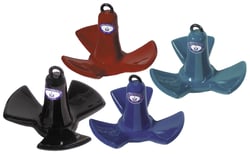

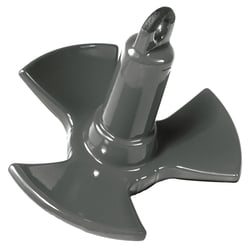
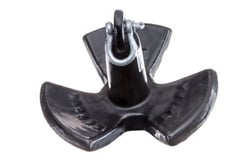

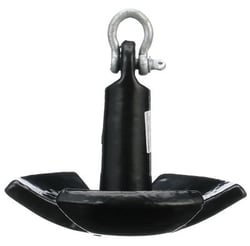
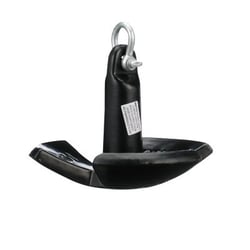
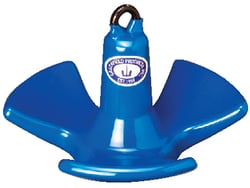
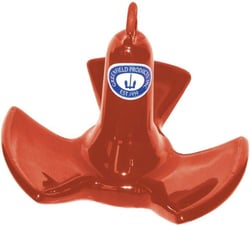
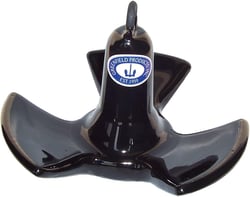
Greenfield Products 530 B IND Vinyl Coated Tri-Fluke River Anchor 30 Lb Black
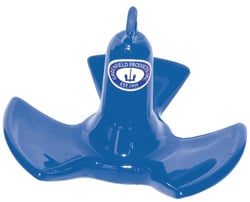
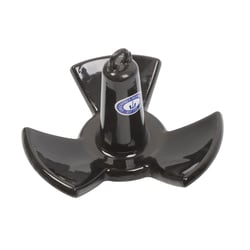
 Representative Photo, actual item may vary
What Are River Anchors?
River anchors are a specialized category of marine anchors engineered specifically for the dynamic demands of moving water. Unlike ocean or lake anchors, which contend primarily with wind and wave action, river anchors must dig in and hold against persistent, often powerful downstream current — across bottoms that can shift from soft gravel and mud to hard rock and clay within a single float. Choosing the wrong anchor on a river isn't just inconvenient; it can be genuinely dangerous. As experienced river guides often put it, anchoring in fast water is one of the most demanding tasks in the boating world, and having the right gear makes all the difference.
Why River Anchors Are Different
River bottoms present a unique anchoring challenge. The substrate constantly changes — you may encounter mud, hard rock, gravel, clay, and bedrock in the same stretch of water. A traditional fluke-style anchor that performs well in sandy ocean bottoms may skip harmlessly along a cobble riverbed without ever setting. River-specific anchor designs account for these variables by prioritizing fast, positive engagement with diverse bottom types, as well as the ability to break free cleanly when you're ready to move on. A hung anchor in fast current is one of the leading causes of river boating accidents, making anchor retrieval features just as important as holding power.
Common River Anchor Types
- Pyramid Anchors: Among the most widely used river anchors, pyramid anchors feature a dense, three- or four-sided profile that bites quickly into gravel and sand bottoms. They come in a wide range of weights — typically 20 to 45+ pounds — to match different boat sizes and current speeds. Many river guides consider a well-sized pyramid to be a reliable all-around choice for mixed bottom conditions.
- Rocking Chair (Columbia River Rocker) Anchors: Widely favored on large, fast rivers like the Columbia, the rocking chair style features tines designed to grab and hold diverse bottoms including rock, gravel, and mud. Many versions include a breakaway system, meaning if the anchor becomes lodged on the bottom, the mechanism releases and allows you to pull the anchor out in reverse — a critical safety feature in heavy current.
- Grapnel Anchors: With their multi-pronged, hook-like design, grapnel anchors are shaped to grab onto underwater structure — rocks, submerged timber, and hard surfaces — rather than burying into soft substrate. They are particularly well-suited to smaller river craft like kayaks, canoes, and jon boats, and their folding tines make them compact and easy to stow.
- Spin / Plate Anchors: An innovation on the traditional pyramid, these anchors use stacked rotating steel plates engineered to conform to the riverbed, maximizing surface contact and drag. They can generate significantly more holding power than a comparable-weight pyramid without adding extra mass.
- Mushroom Anchors: Best suited for soft bottoms and slow-moving river sections, mushroom anchors are lightweight and commonly used on smaller craft. They are not ideal for fast current or rocky bottoms, where they lack sufficient bite.
Sizing Your River Anchor
Getting the right anchor weight is critical. Guidance from experienced river guides suggests that for larger drift boats (14–17 feet), anchors in the 30–40 pound range are common, while smaller boats and lighter flows may be handled with a 20-pound anchor. The key principle: always err toward a larger size rather than a smaller one, especially in faster water. More anchor rope (rode) also plays a role — a longer line allows the anchor to approach a near-horizontal angle to the riverbed, dramatically improving holding power.
Material & Environmental Considerations
Traditionally, river anchors were cast from lead due to its density and low cost. However, there is growing awareness that lead anchors shed material over time, releasing lead particulate directly into river ecosystems. Steel and galvanized steel anchors have become increasingly popular as environmentally responsible alternatives that still deliver the weight and durability needed for serious river use. When moving between different watersheds, always clean your anchor thoroughly to avoid inadvertently transporting invasive species.
Anchor System Accessories
A complete river anchoring setup goes beyond just the anchor itself. Anchor nests or cradles securely hold the anchor while underway, reducing rattles and preventing damage to the boat. Pulley systems provide mechanical advantage when retrieving heavy anchors from depth, while quick-release cleats allow you to drop the anchor line instantly in an emergency — an essential safety feature when running rivers with technical water.