



AC General Purpose Pumps

What Are AC General Purpose Pumps?
AC general purpose pumps are electrically powered fluid-moving devices that run on standard alternating current (AC) voltage — typically 115V or 230V — drawn from a standard wall outlet or hardwired circuit. Unlike DC or gas-powered alternatives, AC-powered pumps are the go-to choice for stationary or semi-permanent installations where a reliable power source is always available. Whether you need to circulate water through a plumbing loop, drain a flooded space, or transfer fluid between containers, an AC general purpose pump offers a practical, consistent solution.
How AC General Purpose Pumps Work
At their core, most AC general purpose pumps use either a centrifugal or positive displacement mechanism. Centrifugal pumps — by far the most common type — use a rotating impeller to impart velocity to the fluid, converting that motion into pressure that pushes liquid through the system. Positive displacement pumps, on the other hand, trap a fixed volume of fluid and force it through the discharge side at each cycle, making them well-suited for thicker liquids or applications that demand a consistent, measured flow regardless of pressure variation.
Within the centrifugal family, you'll find several subtypes especially relevant to plumbing and utility applications:
- Inline Pumps: Mounted directly in the pipe run, inline pumps are compact and space-saving. They are commonly used for hot water circulation or chilled water systems in residential and commercial buildings.
- End-Suction Pumps: Among the most widely used centrifugal designs, end-suction pumps are well-suited for moderate flow applications such as water supply, irrigation, and HVAC circulation.
- Multi-Stage Pumps: Featuring multiple impellers arranged in series, multi-stage pumps achieve significantly higher pressures than single-stage designs — ideal for high-rise buildings, booster applications, or systems with substantial elevation changes.
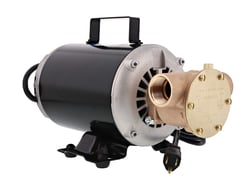
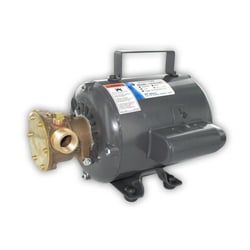
- Self-Priming Utility Pumps: These portable AC-powered pumps can draw fluid up from below without needing to be pre-filled with liquid, making them versatile for drainage, fluid transfer, and utility tasks wherever AC power is accessible.
Common Applications
AC general purpose pumps serve an enormous range of applications. In residential plumbing, they are used to pressurize water supply, boost low-pressure systems, and circulate hot water through heating loops. In marine settings, AC-powered general purpose pumps handle tasks like bilge drainage, washdown systems, and raw-water circulation for onboard air conditioning. In light industrial and commercial environments, they move chemicals, process fluids, and wastewater with reliability that gas or battery-powered pumps simply can't match for continuous-duty scenarios.
Key Factors When Choosing an AC General Purpose Pump
Selecting the right pump comes down to matching the pump's specifications to the demands of your system. The most important considerations include:
- Flow Rate: Measured in gallons per minute (GPM) or liters per minute (LPM), this determines how much fluid the pump can move over time.
- Head Pressure: The vertical distance and friction losses the pump must overcome — critical for sizing any pump correctly.
- Fluid Compatibility: Pump materials matter. Bronze, stainless steel, and certain plastics are specified based on whether the fluid is fresh water, salt water, a chemical, or contains suspended solids.
- Duty Cycle: Some AC pumps are rated for continuous operation, while others are designed for intermittent use only. Always match the duty cycle rating to your application demands.
- Motor Efficiency: Modern premium AC pumps increasingly use brushless or high-efficiency induction motors that reduce operating costs and extend service life compared to older motor technologies.
- Dry-Run Protection: Pumps that detect loss of prime and shut down automatically prevent costly motor damage — an important feature for unattended installations.
Maintenance Tips
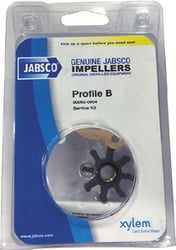
AC general purpose pumps are generally low-maintenance, but a few routine practices go a long way toward maximizing lifespan. Periodically inspect impellers for wear or debris, check inlet strainers and filters, verify that electrical connections are tight and protected from moisture, and confirm that the pump is not running dry. Always consult the manufacturer's guidelines for recommended service intervals specific to your pump model.