



Battery Switches - Electric
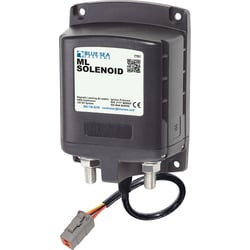

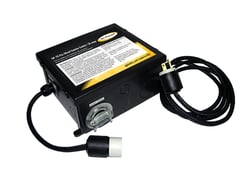

What Are Electric Battery Switches?
Battery switches allow you to disconnect and connect your batteries and your vessel's electrical system. In certain applications, they serve as battery selectors, letting you choose which battery bank is connected, while in others they function as a master switch for an entire boat or RV. In the electric or remotely actuated variety, a toggle or rocker switch controls the actual disconnect mechanism located elsewhere in the system — making them especially convenient when batteries are tucked away in hard-to-reach compartments.
Why Electric Battery Switches Matter for RVs and Boats
A battery switch allows you to manage the electrical flow between different battery banks, with its main function being to isolate the starting battery from the house battery — ensuring that even if your onboard electronics or lights drain the house bank while anchored, you still have a fully charged battery dedicated to starting the engine. This single function alone can be the difference between a smooth day on the water and a frustrating, stranded situation.
Beyond preventing battery drain when a vessel is not in use, battery switches provide a quick way to cut power during maintenance or emergencies, allow dual battery control so you can run "house" and "starting" batteries separately or together, and enable instant switching to a reserve battery if your starter battery dies.
For RV owners, battery disconnect switches are equally important — keeping batteries from discharging during storage and protecting onboard electronics from parasitic draw over time.
Key Considerations When Shopping Electric Battery Switches
- Switch Positions: On a standard four-way switch, "Position 1" typically connects the engine start battery, "Position 2" connects the house battery bank for appliances, and "ALL" (or 1+2) combines both banks.
- Alternator Protection: Depending on how you're mounting your battery switches and who might be using your boat, a switch with an alternator field disconnect may be something to consider.
- Marine-Grade Construction: Marine-grade switches are built for harsh conditions, with corrosion-resistant materials, ignition protection, and heavy-duty contacts designed for continuous marine use.
- Mounting Location: Some installations opt for electronic battery switches — where a toggle switch controls the actual battery switch located somewhere else — making all design intent goals more automatic and user-friendly.
- Combined Battery Use: While the ALL setting can provide extra power if a battery is weak, using it while anchored risks draining every battery on the boat simultaneously.
Top Brands in Electric Battery Switches
Go Power! is a well-respected name in mobile power solutions for RV and marine applications. Go Power! lithium and AGM batteries are engineered to store solar energy and power RV, marine vessel, or off-grid systems reliably, and their battery management accessories — including electric switches — are designed to integrate seamlessly into complete onboard power systems. Their background in solar, inverters, and battery charging makes them a natural fit for owners looking for cohesive, well-matched electrical components.