



Brake & Parts Cleaners

Why Brake & Parts Cleaners Matter
Whether you're servicing a trailer's drum brakes before a long haul or refreshing the calipers on a daily driver, brake and parts cleaners are one of the most essential maintenance products in any shop. Brakes are a safety-critical system, and even a thin film of grease, brake fluid, or road grime on pads, rotors, drums, or calipers can cause reduced stopping power, premature wear, and the telltale squeaks that signal contamination. A quality brake cleaner cuts through those contaminants quickly and completely — leaving the surface dry, residue-free, and ready for inspection or reassembly.
What Brake & Parts Cleaners Do
These aerosol-based cleaners are purpose-built to dissolve and flush away the specific contaminants that accumulate in brake systems: brake dust, brake fluid, grease, oil, and oxidized residue. Unlike general-purpose degreasers, brake cleaners are formulated to evaporate rapidly and leave absolutely no residue that could compromise friction surfaces. They are commonly used on:
- Brake drums, rotors, and discs
- Calipers and wheel cylinders
- Brake pads and shoes
- CV joints and chassis components
- General metal parts, tools, and machinery
Most formulas fall into two categories: chlorinated (faster-evaporating, generally stronger cleaning power) and non-chlorinated (environmentally preferred, required in some states). Understanding which type is appropriate for your region and application is an important consideration before purchasing.
Chlorinated vs. Non-Chlorinated: What to Know
Chlorinated brake cleaners evaporate faster and are non-flammable, making them ideal for busy shop environments. Non-chlorinated formulas are flammable but are mandated by VOC regulations in several states, including California. If you work across different regions, look for 50-state compliant options that meet the strictest environmental standards without sacrificing cleaning performance.
Top Brands in Brake & Parts Cleaners
Permatex is a trusted name in automotive chemical maintenance, offering both chlorinated and non-chlorinated brake and parts cleaner formulas. Their products are engineered to penetrate, dissolve, and remove dirt, oil, and brake fluids from brake systems and metal parts, while their non-chlorinated formula is specifically designed to be safer for aluminum surfaces and helps manage EPA halide limits for environmentally responsible use.
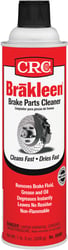
CRC Industries created the original aerosol brake parts cleaner — the iconic Brākleen® — back in 1971, and it remains the #1 brand in brake cleaner worldwide. Their lineup includes non-flammable, non-chlorinated, and Pro Series variants, giving professionals and DIYers alike a purpose-matched solution for virtually any brake service job.