



Emergency Plugs

What Are Marine Emergency Plugs?
An emergency plug — sometimes called a bung or hull plug — is one of the most important yet overlooked pieces of safety gear a boater can carry. Small leaks in the hull can be plugged to stop the flow of water until the boat and crew get back to haul out or the beach. Whether a thru-hull fitting fails, a hose connection lets go, or an impact breach opens in the hull, having the right plug on hand can mean the difference between a minor inconvenience and a catastrophic sinking.
Why Every Boat Needs Emergency Plugs Aboard
Some water inside the hull is normal, but a leak is something else altogether — keeping a variety of emergency boat plugs aboard is just a smart move for any boater. Modern vessels are fitted with multiple penetrations below the waterline: engine cooling intakes, heads, depth transducers, speed sensors, and air conditioning systems all require thru-hull fittings. Everyone is aware of the engine cooling intake and through-hulls associated with the head, but the depth gauge and speed transducers probably have them as well — and so might the air conditioning. The newer the boat, the more likely it has multiple thru-hulls to service its amenities.
Best practice is to have a properly sized plug positioned on or next to each thru-hull, with a mallet kept in an easily accessible location. This ensures that in a crisis, any crew member can act immediately without searching the vessel for the right gear.
Types of Emergency Plugs
Emergency plugs have evolved well beyond the traditional tapered softwood bung, though both old and new designs serve a vital purpose:
- Wood Plugs (Bungs): Soft wood plugs can be pushed or pounded into a failed thru-hull almost like a large cork and do a good job of stopping the water. They are inexpensive, time-tested, and easy to attach by lanyard to each seacock for instant access.
- Foam / Elastomer Plugs: Modern closed-cell foam and rubber-composite plugs offer greater versatility. Capable of sealing round, oval, or irregular holes in boat hulls, these plugs are compressed by hand and inserted into the hole, stopping or reducing the inward flow of water as the foam returns to its original shape.
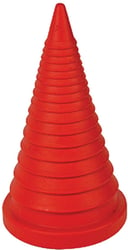
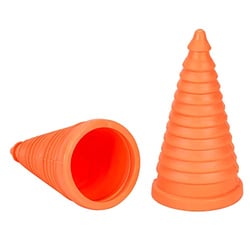
- Form-Fitting Cone Plugs: Cone-shaped plugs can be used to stop or slow leaks at a thru-hull, but can also be crammed longways into a hull breach or cut to fit varying sizes of busted hoses, broken pipes, or any irregular hole.
What to Look for When Shopping Emergency Plugs
When selecting emergency plugs, consider the range of thru-hull sizes on your vessel and choose plugs — or a set of assorted sizes — that can cover each one. Look for materials that resist mold and swelling over time. High-density foam plugs will remain soft and ready to go for years and will not mold or swell up like conventional wood plugs. Visibility matters in a crisis, too — bright orange coloring allows a plug to be quickly located in an emergency. Finally, check whether your plug meets recognized safety standards: quality plugs meet US Sailing special equipment requirements.
Top Brands in Marine Emergency Plugs
Forespar is the leading name in modern marine emergency plugs. Their flagship Sta-Plug® line represents a significant advancement over traditional wood bungs. The Sta-Plug® is Forespar's form-fitting emergency plug — a soft cone-shaped design allows it to easily fill the irregular shapes of hull impact breaches, as well as any round hole leak from a hose or thru-hull, while unique edge-gripping riblets help hold the plug in a hole, keeping water out. The Sta-Plug® is available in full-size and Mini versions to cover a wide range of thru-hull diameters, making it straightforward to stock the right plug for every fitting on your boat.