



Folding/Grapnel Anchors
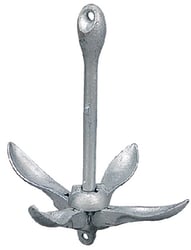

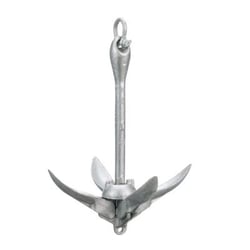

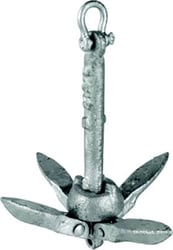
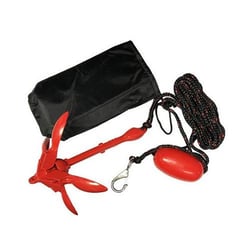


What Are Folding & Grapnel Anchors?
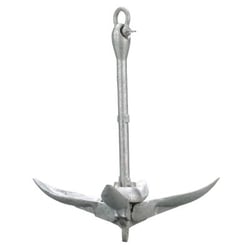
Folding and grapnel anchors are purpose-built anchoring solutions for small watercraft. Characterized by multiple curved prongs — typically four — that radiate from a central shank, grapnel anchors hold a boat in place by hooking onto rocks, coral, weeds, and other hard or irregular underwater structures rather than by burying into soft sediment. The folding variety takes this design one step further: the prongs hinge flat against the shank for storage, then spring open on deployment, making them one of the most space-efficient anchor styles on the water.
How They Work
A grapnel anchor's holding power is fundamentally different from that of a fluke or plow anchor. Instead of digging into the seabed, the prongs latch onto whatever they can grab. Once a prong finds purchase on a rock or reef structure, it can generate remarkable holding force — but that same tenacious grip can also make retrieval a challenge if the anchor becomes deeply fouled. Most modern folding grapnels address this by allowing some play in the tines, so a steady vertical pull is usually enough to free the anchor from a snag.
Best Uses for Grapnel Anchors
These anchors shine in situations where other styles struggle. Their multi-prong design makes them particularly effective in rocky or weed-covered bottoms, where a single-fluke anchor might slide or fail to set. They're a natural fit for kayaks, canoes, dinghies, inflatables, and personal watercraft — essentially any compact vessel where storage space is limited and a full-size anchor simply isn't practical. Grapnel anchors are also a popular choice as a secondary or lunch-hook anchor, providing quick, temporary holding while fishing, swimming, or beaching the boat.
Their compact folding design also makes them ideal for fresh water environments — rivers, lakes, and inland waterways — where rocky or gravelly bottoms are common and the need for a small, portable anchor is high.
Limitations to Keep in Mind
No anchor is a one-size-fits-all solution, and the grapnel is no exception. Because the prongs rely on snagging rather than burying, they offer very limited holding power in soft mud or fine sand. They're also best suited to calm or lightly flowing conditions; in heavy weather or strong currents, a heavier anchor design with deep-penetrating flukes will outperform a grapnel. For most boaters, the grapnel works best as a complementary anchor alongside a primary fluke or plow-style anchor.
What to Look for When Shopping
When selecting a folding or grapnel anchor, consider these key factors:
- Weight: A common guideline is approximately 1 pound of anchor weight per 2 feet of boat length, adjusted upward for high-windage vessels or exposed conditions.
- Material: Galvanized steel is the most common construction, offering solid corrosion resistance at an accessible price. Stainless steel models offer a step up in longevity.
- Locking Mechanism: Look for a reliable collar or pin that locks the prongs firmly open when deployed and securely folded during storage — a loose mechanism can compromise both safety and convenience.
- Prong Design: Spoon-shaped or angled prongs tend to bite the seabed more aggressively and are less prone to slipping on smooth surfaces.
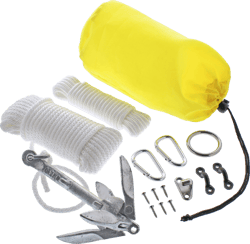
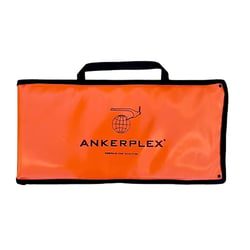
- Included Accessories: Some kits include braided nylon anchor rope and a stowage bag, making them ready to use right out of the box — a great value for first-time buyers.
Maintenance Tips
A little care goes a long way with any marine anchor. Rinse your grapnel anchor thoroughly with fresh water after every outing to wash away salt, sand, and debris. Inspect the hinge points and locking collar regularly for signs of wear, corrosion, or deformation. Store the anchor folded and dry to maximize the life of both the metal and any protective coating.