



Mooring Anchors

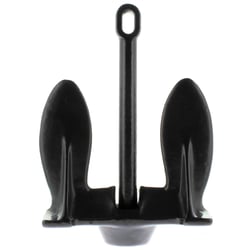
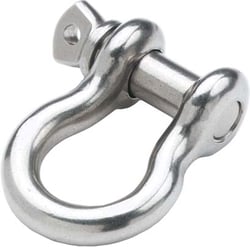
 Representative Photo, actual item may vary


What Is a Mooring Anchor?
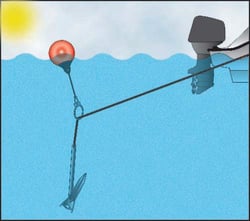
A mooring anchor is fundamentally different from the everyday anchor stowed in your bow locker. Unlike a traditional anchor that is carried aboard and deployed temporarily, a mooring anchor is a permanently installed, fixed-position device set into the seabed and connected via chain to a surface buoy. Boaters simply pick up the mooring pennant and tie off — no anchoring technique required. This permanence is what sets mooring anchors apart: mooring anchors are engineered to hold a vessel securely for days, weeks, or even entire seasons, withstanding wind shifts, tidal surges, and storm conditions that would challenge a conventionally anchored boat.
Why Mooring Anchors Matter
The stakes of proper mooring are real. Improper anchoring and mooring contribute significantly to marine property losses every year. A correctly sized and installed mooring anchor provides far greater holding power than a standard hook-and-rode setup, making it the preferred choice for overnight stays, extended absences from the vessel, and any situation where a boat needs to remain stationary without active supervision. Mooring systems also reduce swing room compared to free anchoring, making them a safer option in crowded harbors and mooring fields.
Types of Mooring Anchors
Choosing the right mooring anchor starts with understanding your seabed, vessel size, and expected conditions. There are four primary types, each with distinct strengths:
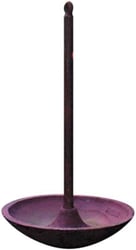
- Mushroom Anchors — The most widely used mooring anchor. Their inverted-mushroom shape allows them to sink into soft silt or mud bottoms, building suction and holding power over time. They are available in a wide range of weights, from small recreational sizes up to several thousand pounds for commercial mooring fields. Best suited to muddy or silty substrates; less effective in rock or coarse sand.
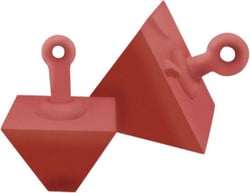
- Pyramid Anchors — A cast-iron alternative to the mushroom that embeds into the seafloor more rapidly thanks to its concentrated, apex-down shape. Pyramid anchors deliver an impressive holding-power-to-weight ratio and perform well across sandy, muddy, and even rocky bottoms, making them a versatile choice for tidal environments.
- Helix (Screw-In) Anchors — A modern, professional-grade solution. A central steel shaft with large helical blades is literally screwed into the substrate, delivering extreme holding power relative to their weight. Helix anchors leave minimal seabed disturbance, making them an eco-friendly option popular in marinas and environmentally sensitive areas. Installation typically requires a diver or professional installer.
- Deadweight Anchors — The simplest concept: large blocks of concrete or heavy metal that resist movement through sheer mass. Deadweight anchors are affordable, straightforward, and particularly suited to rocky bottoms where penetrating anchor types struggle to grip. Their main drawback is bulk — they are heavy, unwieldy, and can be expensive to deploy.
Key Considerations When Shopping for a Mooring Anchor
Selecting the right mooring anchor requires matching several variables to your specific situation:
- Seabed type — Soft mud and silt favor mushroom anchors; mixed or rocky bottoms suit pyramid or deadweight designs; helical anchors work in a wide range of substrates.
- Vessel size and weight — A common rule of thumb is that a mooring anchor should weigh approximately 5 to 10 times the vessel's length in feet. A 25-foot boat, for example, calls for significantly more holding mass than a small dinghy.
- Scope and chain — The rode (chain or cable) connecting the anchor to the surface buoy should generally be at least 1.5 times the maximum water depth for the bottom (ground) chain. A shallower angle of pull keeps the anchor working horizontally into the substrate for maximum holding.
- Inspection and maintenance — Chains corrode near the bottom link where abrasion is greatest. Annual inspection is the minimum; saltwater environments may require more frequent checks to ensure the system remains safe and reliable.
Whether you're setting up a private mooring on a lake, maintaining a slip in a tidal harbor, or establishing a permanent mooring field, investing in the correct mooring anchor is the foundation of a safe, worry-free boating season.