



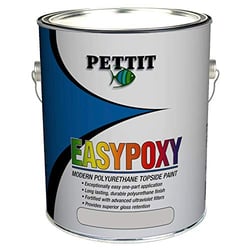
Pettit Topside Paint
 Representative Photo, actual item may vary

What Is Topside Paint and Why Does It Matter?
Every boat owner knows the unmistakable look of a well-kept vessel: a gleaming hull that turns heads from the dock and holds up mile after mile on the water. That finish isn't just cosmetic. Topside paint is the protective coating applied to all surfaces above the waterline — hull sides, decks, and superstructure — forming the first line of defense against the harsh realities of the marine environment.
Unlike bottom paint, which focuses on preventing fouling growth below the waterline, topside paint is engineered for a different set of challenges. These coatings must resist intense UV radiation, saltwater spray, abrasion, moisture intrusion, and the constant flexing of the hull as it moves through the water. Without proper topside protection, fiberglass and gelcoat can oxidize, losing their color and gloss over time.
The Pettit Topside Paint Lineup
Pettit Marine Paint has earned a longstanding reputation in the world of marine coatings, and their topside paint products reflect decades of formulation expertise. Pettit topside paints are recognized for their gloss retention and resistance to UV rays, making them a go-to choice for both experienced boaters and those tackling their first repaint project.
Their flagship one-part polyurethane formula — the EZ-Poxy — is a standout in the category. It combines silicone enhancement for brilliant shine with advanced UV filters for long-term gloss retention, all while remaining easy to apply by brush, roller, or spray. For boaters who want a professional-looking finish without the complexity of a two-part system, it delivers a gelcoat-like result at a more accessible skill level.
One-Part vs. Two-Part Topside Paints
When selecting a topside coating, one of the most important choices is between one-part and two-part formulations. Understanding the difference helps ensure you get the right performance for your situation:
- One-part polyurethanes: Easier to apply, DIY-friendly, and suitable for brush, roller, or spray application. They offer good UV resistance and color retention, and are much simpler to touch up after dings or scratches.
- Two-part polyurethanes: These outperform one-part paints in hardness, scratch resistance, gloss retention, and UV stability, but require more precise surface preparation, stricter mixing ratios, and more careful handling — making them better suited to experienced applicators or professional use.
- Alkyd enamels: A traditional option well-suited to wooden boats. They are flexible enough to move with wood as it expands and contracts, and tend to be the most forgiving for first-time painters, though they typically require more frequent maintenance coats than polyurethane options.
Key Factors to Consider When Choosing Topside Paint
Not every boat or boating environment demands the same coating. Here are the most important considerations before you buy:
- Hull material: Fiberglass, wood, and aluminum each respond differently to topside coatings. Aluminum boats, for example, require copper-free formulations to prevent galvanic corrosion.
- Boating environment: Saltwater and high-sun climates put more stress on topside finishes. Boaters in tropical or coastal conditions may benefit from the added durability of a two-part polyurethane.
- Finish type: High-gloss finishes reflect UV rays and provide a dramatic look, but they also highlight surface imperfections. Satin and matte finishes are better suited to deck areas and interior surfaces where glare and slip resistance are concerns.
- Application method: Most topside paints can be applied via brush, roller and tip, or spray. The roll-and-tip method is the most popular for DIY boaters, delivering smooth results without specialized spray equipment.
Surface Preparation: The Most Critical Step
Regardless of the paint you choose, proper surface preparation is essential to a lasting finish. Thorough cleaning, degreasing, and sanding to create a uniform profile — followed by the application of a compatible marine primer — ensures that the topside paint bonds securely and delivers its full protective potential. Skipping primer or rushing prep work is the most common cause of premature peeling or paint failure.