



Radar Reflectors

What Are Marine Radar Reflectors?
A radar reflector is one of the most fundamentally important — and often overlooked — pieces of safety equipment aboard any small vessel. Radar reflectors are metallic devices designed to bounce incoming radar signals back toward their source, dramatically increasing a boat's visibility on another vessel's radar screen. Radar reflectors work by using intersecting metal plates arranged in specific geometric patterns that return the radar signal rather than scattering it in random directions.
The challenge is that many popular boat materials simply don't reflect radar well on their own. Fiberglass and wooden boats lack natural radar reflectivity, so a radar reflector significantly improves how these boats appear on radar screens. Even a vessel's round mast, despite its size, tends to scatter radar signals rather than return them cleanly to the source — making a dedicated reflector essential.
Why Radar Reflectors Matter for Safety
In conditions of reduced visibility — fog, rain, darkness, or heavy traffic — your ability to be seen by other vessels can be the difference between a safe passage and a collision. Commercial ships and large vessels depend on radar to navigate, and a small fiberglass sailboat or powerboat without a reflector can appear as barely a blip, or vanish entirely from detection systems. By increasing a boat's effective radar cross-section, a reflector makes the boat easier to detect on another vessel's radar display, which is particularly valuable in fog, rain, or high-traffic areas.
Regulatory bodies take this seriously. SOLAS (Safety of Life at Sea) regulations require all vessels under 150 gross tons, where practicable, to carry a reflector capable of detection on both X-band (9 GHz) and S-band (3 GHz) radar frequencies. Many maritime nations have additional requirements for vessels under 20 meters in length or those constructed primarily of non-metallic materials.
Passive vs. Active Radar Reflectors
There are two main types of radar reflectors to understand before you buy:
- Passive Reflectors: These use metallic plates or surfaces to physically bounce radar signals back to the sender — no power source required. Once mounted, a passive reflector requires no attention: it needs no maintenance, requires no power, and works whether you're underway or at anchor. Common designs include the octahedral corner reflector and the Luneberg lens.
- Active Reflectors (Radar Target Enhancers – RTEs): These electronic devices receive a radar signal, amplify it, and retransmit a much stronger version, significantly increasing the boat's apparent size on a radar screen. While considerably more effective, they require onboard power to operate.
What to Consider When Shopping
When choosing a radar reflector, size matters enormously. The radar cross-section of a reflector increases dramatically with physical size — meaning a larger reflector offers exponentially better detection performance. Elevation is equally critical: the reflector should be mounted as high as practical, ideally at least 4 meters above the waterline, positioned away from obstructions that could shadow incoming radar signals. For sailboats that heel underway, consider designs that maintain effectiveness at varying angles of tilt.
Regular maintenance keeps your reflector performing at its best. Inspect mounting hardware for corrosion, and clean the reflector periodically with fresh water to remove salt and grime that can impair its reflective surfaces.
Top Brands in Marine Radar Reflectors
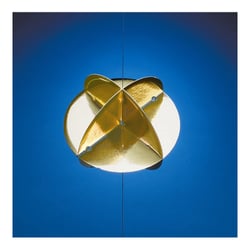
Davis Instruments is one of the most recognized names in passive marine radar reflectors. Their well-regarded Echomaster line uses three interlocking metallic discs that form a skeletal octahedral sphere — a time-tested design trusted by sailors and powerboaters alike for reliable, no-power radar visibility.