



Safety Chains, Cables & Accessories
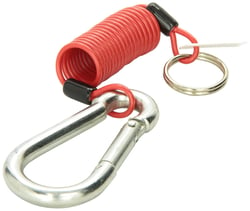

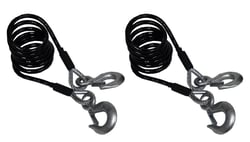



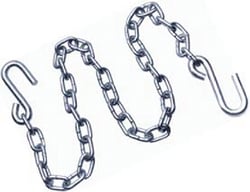



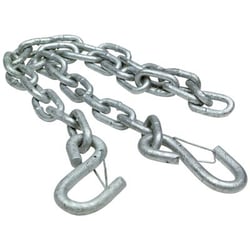



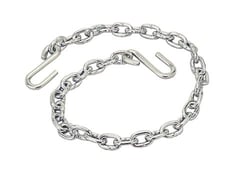
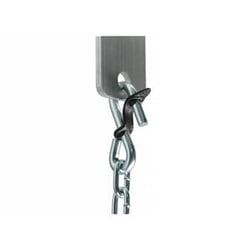


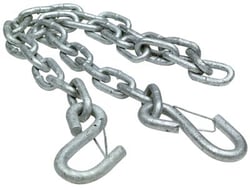

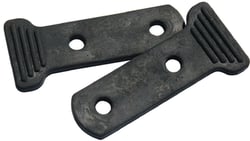
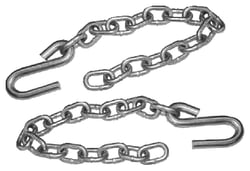
Tie Down Eng 81204 Safety Chain with S-Hooks - Class IV 5/16" x 40-3/4" 7500 lbs (Pair)
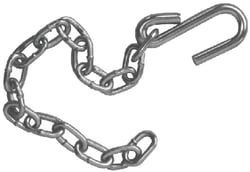
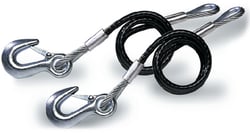
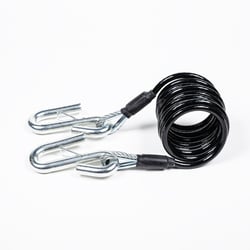
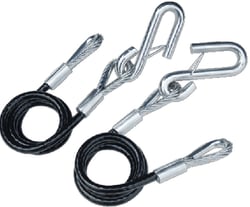
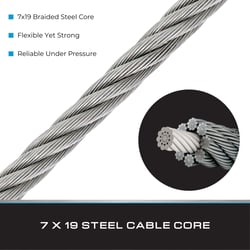
Tie Down Eng 59548 36" Safety Hitch Cables with S-Hooks - Black Vinyl Coated Pair
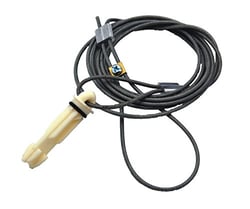

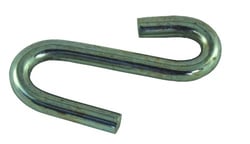

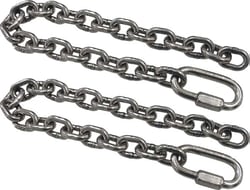

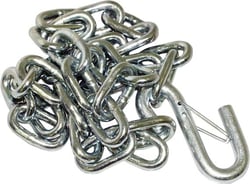
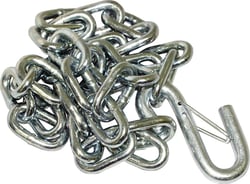
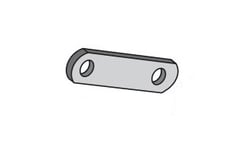
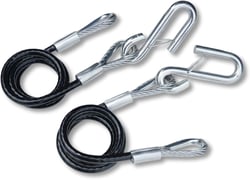
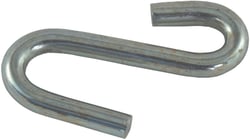


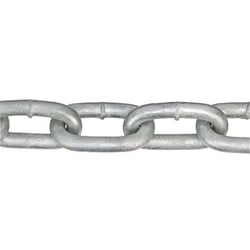
Acco Peerless Chain 5610347 5/16" x 550' Grade 30 Proof Coil Chain Hot Dip Galvanized Drum

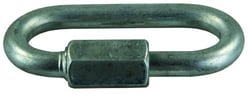
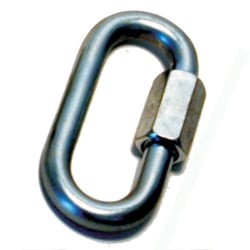
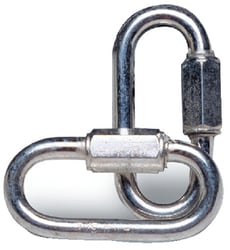
JR Products 01345 1/2" Quick Links Zinc Plated Steel Safety Chain Connectors 2-Pack

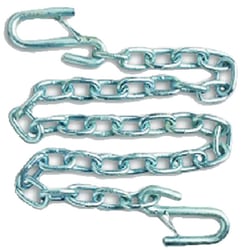

 Representative Photo, actual item may vary
Every trailer connection depends on a ball, a coupler and a latch, but responsible towing also requires a backup. Safety chains, cables and their accessories form that secondary link between a tow vehicle and whatever it is pulling, whether that is a boat, utility trailer, camper or a flat-towed vehicle behind a motorhome.
What Safety Chains and Cables Do
A safety chain is a secondary connection between the rear of the tow vehicle and the front of the trailer. Its job is to keep the two connected if the coupler comes off the ball or the ball separates from the hitch, long enough to bring both vehicles to a stop. Safety chains are also required by law in most places, so they are not an optional upgrade.
Cables serve a similar purpose and are common on tow bars and in setups where a quiet, tangle-free connection is preferred. Breakaway cables do a different job: they tie into a trailer's breakaway switch or surge actuator and activate the trailer brakes if the trailer separates from the tow vehicle.
Key Considerations When Shopping
- Class and capacity: Chain strength should be matched to the gross trailer weight. Common zinc-plated chains are sold in Class II, III and IV ratings, with larger link diameters for heavier loads.
- Length: Chains need enough slack for tight turns but should not drag on the pavement. Extensions can solve fit problems on longer trailer tongues.
- Coiled versus straight: Coiled cables stay off the road and allow slack for cornering, while straight designs suit tow bars with channel guides.
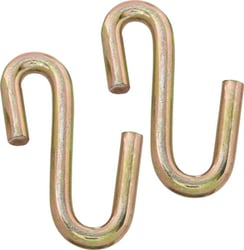
- Hardware: S-hooks, snap hooks and quick links should be sized to the chain and, ideally, include a latch or keeper so they cannot bounce loose.
- Corrosion resistance: Zinc plating, galvanizing or vinyl coatings help hardware hold up to rain, road salt and marine environments.
Top Brands in This Category
Tie Down Engineering is a familiar name in trailer hardware, particularly for boat trailers. Its zinc-plated safety chains with S-hooks come in Class II, III and IV ratings, and the line also includes vinyl-coated cables and accessories such as quick links and chain keepers.
Draw-Tite has been building hitches since 1946, and its towing accessories follow the same engineering approach as its custom-fit hitches. Its safety chains pair naturally with its receivers and are available with quick links on both ends.
Demco Trailer is known for breakaway cables used with electric brake systems and hydraulic surge brake actuators, along with heavy-duty safety cable extensions for RV and towing applications.
Roadmaster Tow focuses on flat-towing equipment, including coiled and hybrid safety cables for tow bars, cable extensions and replacement breakaway cables for supplemental braking systems.
NSA rounds out the selection with additional options for completing a secure trailer connection.
Inspect and Replace Regularly
Chains and cables work quietly in the background, so wear is easy to overlook. Check for stretched or deformed links, frayed strands, cracked vinyl coatings, rust and worn hooks before each season and after any incident. Cross the chains under the coupler, attach them to the hitch structure rather than the ball mount, and replace anything that shows damage.