



Seacock & Valve Lubricant


Why Seacock & Valve Lubrication Is a Critical Part of Boat Maintenance
Seacocks are among the most important safety components on any boat. Seacock and valve lubricants are a small but vital category of marine maintenance products that keep these hull-penetrating fittings operating reliably — and a seized or leaking seacock can quickly become a life-threatening situation on the water.
Seacocks are hull-mounted marine valves that control water entering or exiting the boat through a thru-hull fitting. They are a primary safety component, allowing rapid shutoff if a hose fails or a fitting is compromised. Whether your boat draws raw water for engine cooling, a marine head, a deck wash pump, or an air conditioning system, each of those through-hull connections depends on a seacock that can close quickly and completely when needed.
What Happens When Seacocks Go Unlubricated?
No matter the material — bronze, stainless steel, or composite — routine maintenance is vital for prolonged life and ease of operation. If ignored and never exercised, valve seals can dry out, causing leaks, difficulty in operation, and blockage. Marine growth can also score seals, causing them to leak. A valve that hasn't been exercised or lubricated for a season may be nearly impossible to close in an emergency — precisely when you need it most.
Marine experts generally recommend lubricating seacocks at least once per year, ideally at the beginning and end of every boating season. Cycling the handle monthly also helps prevent internal sticking and buildup of marine growth around the ball or cone.
Choosing the Right Lubricant for Your Valves
Not all lubricants are appropriate for marine valve applications. Key considerations when choosing a seacock or valve lubricant include:
- Compatibility with valve materials: Rubber cone valves require a non-petroleum-based lubricant such as silicone, while ball valves typically accept a wider range of marine greases and synthetic formulas.
- Water resistance: Lubricants used in submerged or constantly wet environments must resist washing off and maintain their protective film even with prolonged water exposure.
- Environmental safety: Many boaters and marinas prioritize biodegradable formulas that won't harm aquatic environments if minor run-off occurs.
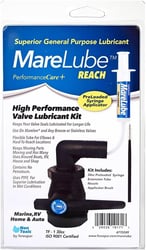
- Application method: Thick grease formulas are ideal when the valve can be disassembled, while liquid lubricants are well-suited for hard-to-reach valves that remain installed.
Forespar MareLube: Purpose-Built for Marine Valves
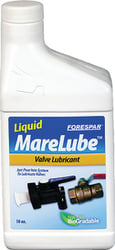
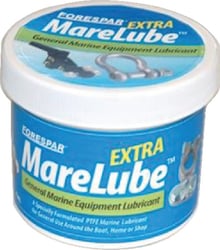
Forespar is the leading name in seacock and valve lubrication, and their MareLube line was developed specifically to address the maintenance needs of marine plumbing systems. Forespar's MareLube family includes both a traditional grease formula and a Liquid MareLube designed for valves where access is difficult or where convenience is desired — users simply pour it into the system through the valve tailpipe or hose and activate the handle. The Liquid MareLube is formulated with advanced PTFE technology and is a readily biodegradable, biorenewable formula blended from high-quality vegetable oils treated with anti-oxidants and PTFE micropowder, making it a responsible choice for use in and around the water.
Whether you are commissioning a boat at the start of the season, preparing for winter lay-up, or troubleshooting a stiff or leaking valve mid-season, keeping a quality seacock and valve lubricant aboard is simple, inexpensive insurance for one of your boat's most critical safety systems.