



Starting Fluid

What Is Starting Fluid and Why Does It Matter?
Starting fluid is a volatile, flammable liquid used to aid the starting of internal combustion engines, especially during cold weather or in engines that are difficult to start using conventional starting procedures. For RV owners and boaters, a stubborn engine on a frigid morning or after a long off-season storage period is a frustratingly common reality — and starting fluid is one of the most effective tools for getting things moving quickly.
How Starting Fluid Works
Starting fluid spray is a highly flammable aerosol formulation designed to assist internal combustion engines during difficult cold starts. The primary active ingredient in most sprays is diethyl ether — a substance with a low flash point of around -45°C / -49°F, which means it vaporizes quickly and ignites easily even in frigid conditions.
A short burst into the air intake allows vapors to mix with incoming air and ignite more quickly than typical fuel. This creates combustion that helps the engine reach normal speed, and may allow it to run on its own by pulling in the appropriate fuel volume after startup.
By providing this volatile vapor, starting fluid can reduce startup time substantially in sub-zero conditions, often by facilitating quicker ignition and minimizing prolonged cranking that drains batteries. This is especially valuable in marine and RV applications, where a weak starter or low battery can leave you stranded far from help.
When Should You Use Starting Fluid?
Starting fluid is most useful in a handful of specific situations:
- Cold weather starts: In cold weather, particularly below 0°C, gasoline and diesel fuels often fail to volatilize adequately, resulting in insufficient vapor formation within the intake manifold and cylinders, which hinders the creation of a combustible air-fuel mixture and leads to incomplete or failed combustion during startup.
- Post-storage engines: Engines that have sat unused for months may have degraded fuel or dry cylinder walls. A quick burst can help achieve initial ignition.
- Diagnostic aid: If an engine cranks but won't start, spraying a small amount into the intake can confirm whether the issue lies in fuel delivery — such as clogged injectors or a failed pump — versus ignition or compression problems.
It's important to use starting fluid sparingly and only as needed. If you have a persistent problem with your engine that's making it hard to start, starting fluid will only mask it — so be sure to address any underlying mechanical issues with a qualified technician.
Choosing the Right Starting Fluid for Your RV or Marine Engine
Not all starting fluids are created equal. For RV and marine engines — which often face unique challenges like saltwater corrosion exposure, extended storage periods, and high-demand electrical systems — choosing a formula with added protective properties makes a significant difference. Look for products that include upper cylinder lubrication and corrosion inhibitors, and that are verified safe for modern emissions equipment like oxygen sensors and catalytic converters.
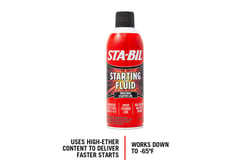
When it comes to trusted names in this category, Sta-Bil is the go-to brand for RV and marine starting fluid. Sta-Bil Starting Fluid is a special formula starting fluid with upper cylinder lube and corrosion inhibitor, and is safe for oxygen sensors and catalytic converters. It works in temperatures down to -65°F (-54°C), making it one of the most cold-weather-capable options available for boats and RVs that see demanding seasonal conditions.