



Teleflex Rotary Steering

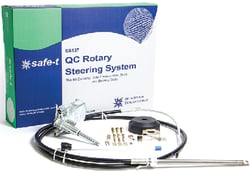
 Representative Photo, actual item may vary
Teleflex Rotary Steering for Boats
Teleflex built much of its marine reputation on mechanical steering, and its rotary systems remain some of the most recognized in recreational boating. A rotary system uses a round, gear-driven helm behind the dash that turns the wheel's rotation into push-pull motion in a flexible cable. That cable runs to the engine or drive. The design is compact, relatively simple to service, and well suited to runabouts, bass boats, pontoons, ski boats and small cruisers. Browse the full Rotary Steering category to compare systems from other makers, or visit the Teleflex brand page for the wider product range.
Safe-T and Safe-T QC Helms
The Safe-T line is the foundation of Teleflex rotary steering. The Safe-T QC helm is a single-cable design that can replace Safe-T helms made since 1968 with little to no modification to the dashboard. That backward compatibility is a big reason the platform has stayed in service for so long. These kits are generally specified for power-assisted sterndrive boats and use a quick-connect cable, a 3/4-inch tapered steering shaft and 3.0 turns lock-to-lock. The snap-in cable connection means installation does not require special tools, and stainless steel cable output ends help resist corrosion in a wet environment.
No-Feedback (NFB) Rotary Systems
Teleflex also developed no-feedback rotary steering for outboard boats. On an outboard, propeller torque can transmit back through the cable and make the wheel pull in the driver's hands. NFB helms address this by locking out that torque. The NFB Safe-T II is aimed at outboards up to 100 HP and meets NMMA and ABYC safety standards. The NFB 4.2 helm steps up to larger engines, with a design for outboards up to V6 and a refined feel over standard mechanical steering. As the name implies, it takes 4.2 turns lock-to-lock, trading a little more wheel travel for lighter steering effort.
Choosing the Right Teleflex Rotary Kit
- Engine type: Match the helm to the application. Safe-T QC suits sterndrives and small outboards, while NFB helms are intended for outboard use.
- Single or dual station: Many NFB helms are designed for single-station use only, so check this if your boat has a flybridge or second helm.
- Cable length: Cables are sized in one-foot increments, and the correct length depends on your boat's routing from helm to engine.
- Wheel and shaft: Confirm your wheel fits the standard 3/4-inch tapered shaft and stays within the helm's maximum diameter, commonly 16 inches.
- Components: A complete system needs a helm, bezel, cable and steering wheel. Wheels are often sold separately.
A Note on Branding
Teleflex Marine's steering business later became SeaStar Solutions, and SeaStar is the modern incarnation of Teleflex Marine, with most legacy parts integrating with newer components. If you are maintaining an older boat, you will often see both names on helms, cables and part numbers. Cross-checking your existing helm style and cable series before ordering is the best way to get a correct match.
Whether you are restoring a vintage runabout or upgrading an outboard rig for smoother handling, Teleflex rotary steering offers a proven mechanical option backed by decades of marine engineering.