



Underwater Gear
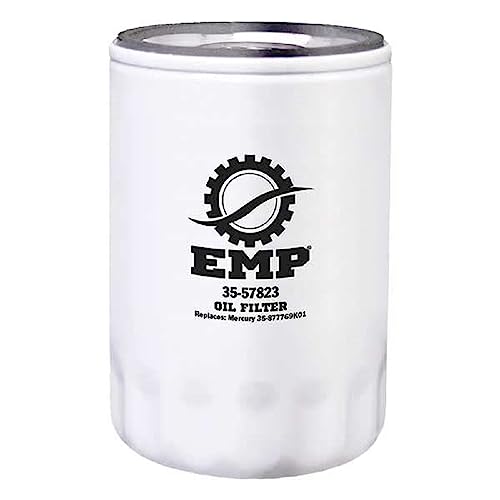 Representative Photo, actual item may vary
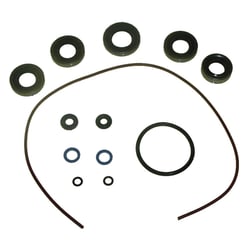
Engineered Marine Products 26-00327 Lower Unit Seal Kit Drive & Gearcase Parts





What Is Marine Underwater Gear?
When boaters and marine enthusiasts talk about underwater gear, they're referring to the collection of components that live beneath the waterline and work together to propel, steer, and stabilize a vessel. These propulsion components typically comprise the propeller, prop shaft, stern gland, thrust-bearing coupling, gearbox, and engine mounts — a tightly integrated system where each part plays a critical role in how a boat handles on the water.
Marine propellers work silently beneath the waterline, yet they have a direct and measurable impact on vessel speed, fuel consumption, vibration levels, and drivetrain reliability. The same is true of the supporting hardware: shafts, struts, and rudders all work in concert with the propeller to convert engine power into smooth, controlled forward motion. When any one of these components is worn, bent, or fouled, the entire system suffers.
Why Underwater Gear Maintenance Matters
The underwater environment is one of the harshest any mechanical component can endure. The propeller is a vital component of any vessel, directly responsible for propulsion and maneuverability. Over time, propellers accumulate marine growth, barnacles, algae, and other fouling that reduce efficiency, increase fuel consumption, and strain the engine.
Marine growth increases surface roughness, which directly reduces hydrodynamic efficiency. In real-world operation, a fouled propeller can increase fuel consumption by 3–10% or more. Beyond biological fouling, physical damage is a constant risk. If you hear odd noises, experience vibration, or lack direction, chances are the propeller is bent, chipped, or damaged. Even minor blade damage can disturb flow symmetry and create imbalance.
Corrosion can weaken your boat propeller and reduce its efficiency, and saltwater environments are especially prone to this problem. Protecting all underwater metal surfaces — propellers, shafts, struts, rudders, and trim tabs — from both fouling and corrosion is essential to keeping a vessel running efficiently season after season.
Key Components to Know
- Propellers: The heart of the propulsion system. Blade count, pitch, diameter, and material all affect performance, handling, and fuel economy.
- Propeller Shafts: Transfer rotational power from the engine to the propeller. A straight, well-supported shaft is critical — if the shaft is damaged or bent, it will cause the propeller to oscillate, putting pressure on the stern gland and causing excessive wear or damage.
- Struts & Cutless Bearings: Support the prop shaft and reduce vibration. Worn strut bearings are a common source of drivetrain noise and shaft wobble.
- Rudders: Provide directional control. Damage to the rudder or its hardware directly impacts steering response and safety underway.
- Trim Tabs & Running Gear: Fine-tune a vessel's attitude in the water, improving efficiency, stability, and ride comfort at speed.
Shopping for Underwater Gear: What to Consider
Regular attention to propeller condition is one of the most cost-effective ways to improve vessel performance without modifying engines or hull structure. When selecting replacement underwater gear, consider the material (aluminum, stainless steel, or bronze), compatibility with your specific engine make and model, and the operating environment — saltwater applications demand more corrosion-resistant materials and hardware than freshwater use.
Foul-release coatings are also an important part of a complete underwater gear strategy. Specially formulated foul-release coatings keep running gear and underwater metals free of marine growth and protected against corrosion. These products can be applied to propellers, shafts, struts, rudders, trim tabs, and through-hull fittings to dramatically reduce maintenance intervals and protect your investment.
Whether you're replacing a damaged prop shaft, upgrading to a performance propeller, or sourcing hardware to rebuild your boat's running gear from the keel up, having the right underwater components is fundamental to safe, efficient time on the water.