



Vinyl-Ester Resin

What Is Vinyl-Ester Resin?
Vinyl-ester resin occupies a unique position in the world of composite materials. Vinyl-ester resin is produced by reacting an epoxy resin with acrylic or methacrylic acids, then dissolving the result in a reactive monomer such as styrene for curing. The result is a material that bridges the gap between the affordability of polyester and the high performance of epoxy — offering mechanical properties and notably lower water uptake than typical polyesters, without the complexity and cost of a full epoxy system.
Why Vinyl-Ester Resin Matters for Marine Maintenance
For boat owners and marine technicians, choosing the right resin can mean the difference between a repair that lasts a season and one that lasts a decade. Vinyl-ester resin delivers superior corrosion resistance, high impact strength, and excellent adhesion to fiberglass reinforcements — making it the material of choice for demanding marine environments. Its longer molecular chain allows it to absorb impact better and shrink less than standard polyester resins.
Typical applications include below-waterline laminates, osmosis and blister repairs, bilge areas, structural reinforcements, and corrosion-prone compartments such as tanks and sumps. Because it cures with a tighter crosslink structure, it is especially well-suited for any repair requiring optimum water and osmosis resistance. It can also be used as a laminating resin in hull construction, where its increased bond strength helps eliminate issues with core material adhesion in high-performance builds.
Vinyl-Ester vs. Polyester vs. Epoxy
Understanding where vinyl-ester fits helps you make the right call for your project:
- vs. Polyester: Vinyl-ester offers far superior chemical and corrosion resistance and significantly better water resistance, making it the better long-term investment for wet-area applications.
- vs. Epoxy: Vinyl-ester provides simpler processing and a lower cost profile than most epoxy systems, while still delivering high-level water and chemical resistance suitable for continuous immersion.
- Compatibility: Vinyl-ester bonds well with fiberglass cloth and mat, including woven, biaxial, and triaxial fabrics, and is compatible with MEKP catalyst systems — always follow the manufacturer's ratio and cure schedule from the technical data sheet.
Key Considerations When Shopping
Before purchasing vinyl-ester resin, keep these factors in mind. Shelf life is typically around 3 months, so only order what you need for your project and use it promptly. Work in a clean, dry environment between approximately 70°F and 85°F for best results — vinyl-ester resins are sensitive to temperature and moisture during cure. Also note that the final laminating layer will cure with a surface tack; a wax additive (sanding aid) is needed on the last coat if you want a hard, tack-free finish for sanding or painting.
Top Brands in Vinyl-Ester Resin
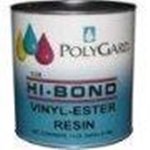
Hi Bond is a well-regarded name in marine-grade composite materials, offering a premium, high-quality, high-strength vinyl-ester based resin designed for use where the highest possible strength is required. The Hi Bond vinyl-ester resin includes hardener and is a trusted solution across boat repair, hull lamination, and structural composite work.