



Hubs
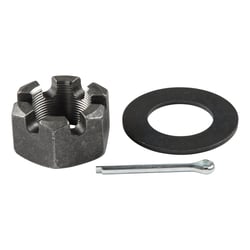
Lippert Components 2023134022 1-3/4in Round Spindle Nut Retainer Kit for 12,000-16,000 lb Axle Hubs

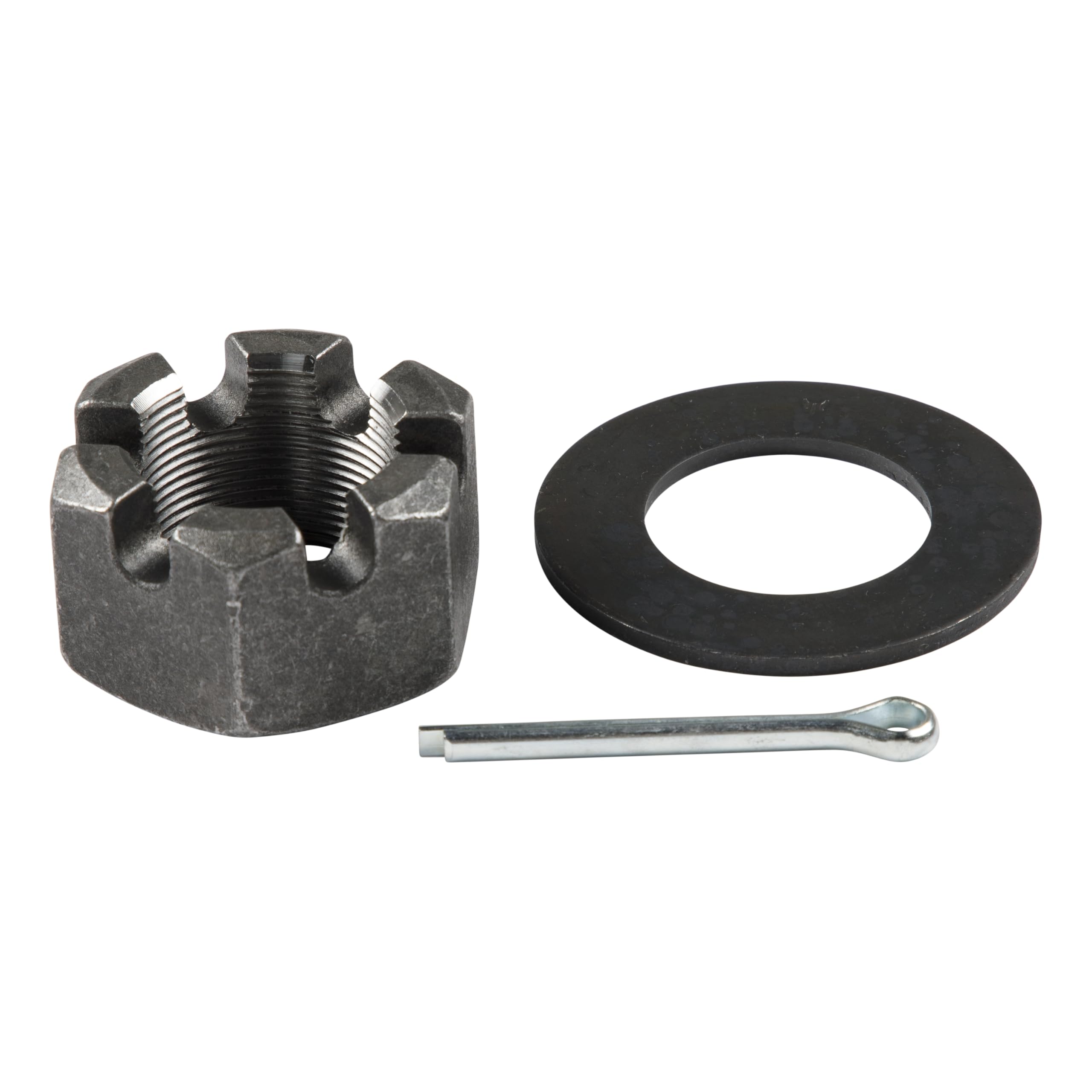 Representative Photo, actual item may vary
Lippert Components 2023134015 Premium Grease Cap Kit 1.9 Inch for 2000-3500 lb Axles
What Are Engine Drive Hubs?
At first glance, a hub looks like a simple metal disc — but it plays an absolutely foundational role in your vehicle's drivetrain. The hub connects the wheel to the axle and transfers the power generated by the engine to the wheels, acting as the critical interface between the rotating axle shaft and the wheel assembly itself. Without a properly functioning hub, your vehicle simply cannot move safely or reliably.
On driven wheels, splined teeth on the hub mesh with matching teeth on the axle shaft, transferring rotational force outward to the wheel. The hub simultaneously carries the vehicle's weight through its integrated bearings, manages axial and radial forces during cornering, and on modern vehicles, often houses an ABS encoder ring that feeds wheel speed data to your vehicle's safety systems. In a front-wheel-drive car, the hub has the added responsibility of allowing the wheel to steer while still transmitting drive torque — a remarkable feat of mechanical engineering happening thousands of times per minute.
Why Hub Condition Matters
Because hubs operate under constant load, heat, and contamination from road debris, they are subject to wear over time. When a hub or its integrated bearing begins to degrade, drivers often notice a grinding, clicking, or knocking noise that becomes more pronounced at speed or during turns. A failing hub can also introduce play into the wheel assembly, leading to vibration, uneven tire wear, and in severe cases, the risk of wheel separation. Increased fuel consumption is another telltale sign, since added friction forces the engine to work harder just to maintain speed.
Modern hub assemblies are typically pre-built, sealed units that incorporate the hub body, wheel bearings, wheel studs, and ABS sensor ring into a single component. Because they are pre-assembled and pre-lubricated at the factory, replacement is straightforward — no bearing packing or specialized pressing required in most cases.
What to Look for When Shopping for a Replacement Hub
- Exact vehicle fitment — hubs are highly application-specific; always verify year, make, model, and drivetrain type.
- ABS compatibility — if your vehicle has ABS, confirm the replacement hub includes the correct encoder ring or sensor provision.
- Material quality — cast iron and aluminum alloy are the most common materials; aluminum offers weight savings while maintaining strength.
- OE vs. upgraded design — some aftermarket hubs address known OE failure points with improved materials or sealing.
Top Hub Brands
Dorman is one of the most recognized names in the aftermarket hub category. With over a century of experience, Dorman's OE Solutions hubs undergo dimensional checks, materials testing, and vehicle try-on testing to ensure a proper fit and long-lasting reliability — making them a go-to for professional technicians and DIYers alike.
Motormite offers targeted, practical replacement solutions for specific hub applications, providing reliable OE-style fitment for everyday repair needs.
Febi (Ferdinand Bilstein) brings its renowned German engineering heritage to the hub category. Febi's drivetrain range is built to OE-matching quality standards, with all hub materials checked for hardness, strength, and mechanical properties, plus rigorous salt and mud spray durability testing.
Genuine parts deliver factory-specification fit and performance, making them an ideal choice for owners who want to restore their vehicle to its exact original specification without compromise.
Winters rounds out the hub lineup with purpose-built options suited to performance and specialty vehicle applications, trusted by enthusiasts who demand precision under demanding conditions.