



AIS Antennas
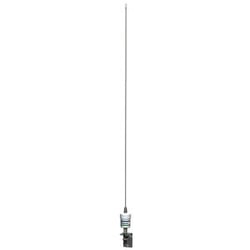

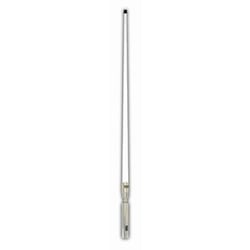

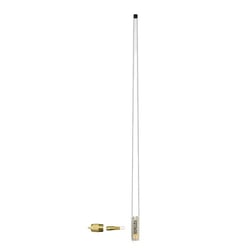
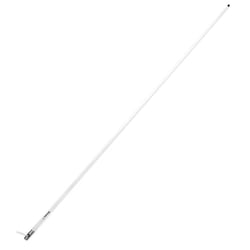
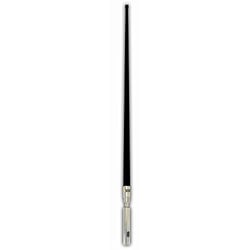
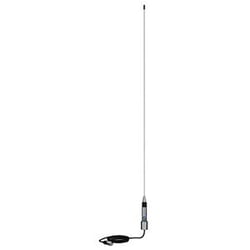
Shakespeare Antennas 5225-XT-AIS 8' Galaxy VHF/AIS Marine Antenna 6dB Gain

What Are AIS Antennas and Why Do They Matter?
The Automatic Identification System (AIS) is one of the most important safety technologies on modern waterways. It works by continuously broadcasting and receiving vessel data — including GPS position, speed, course, and heading — over two dedicated VHF channels (161.975 MHz and 162.025 MHz). This real-time exchange of information gives mariners a comprehensive picture of surrounding traffic, helping to prevent collisions, navigate low-visibility conditions, and coordinate emergency response on the water.
While your AIS transponder does the heavy lifting electronically, the antenna is the critical link between your system and the outside world. A dedicated AIS antenna, precisely tuned to the AIS frequencies, outperforms a standard VHF antenna in both transmit efficiency and receive sensitivity. The result is greater range, cleaner signals, and more reliable vessel tracking — exactly what you need when sharing busy shipping lanes with commercial traffic.
How AIS Antenna Range and Placement Work
AIS operates on line-of-sight VHF radio principles, meaning antenna height is one of the most important factors in your system's effective range. The higher the antenna is mounted — whether on the spreaders, radar arch, or masthead — the farther it can both transmit and receive. Class A commercial vessels can routinely be detected 20 miles or more away, while Class B recreational transponders typically reach 5 to 10 miles depending on antenna height and conditions. Unlike radar, AIS signals can propagate around bends in rivers and behind landmasses, giving you situational awareness that radar cannot always provide.
When shopping for an AIS antenna, key considerations include:
- Dedicated vs. VHF/AIS Combo: A standalone AIS antenna is tuned precisely to AIS frequencies for peak performance, while a combo antenna handles both VHF radio and AIS on a single mount — ideal when deck space or mounting locations are limited.
- Antenna Length and Gain: Longer antennas generally offer higher gain (measured in dB), which increases range. Common options include 3-foot, 4-foot, 8-foot, and 16-foot models, each suited to different vessel sizes and mounting scenarios.
- VSWR (Standing Wave Ratio): A low VSWR rating indicates efficient signal transfer with minimal power loss — an important spec when evaluating antenna quality.
- Mounting Height: Even a modest increase in antenna height can significantly expand your detection range, so plan your installation with elevation in mind.
- Cable Quality and Length: Signal loss in coaxial cable increases with length, so use the highest-quality cable practical for your installation.
Top Brands for Marine AIS Antennas
When it comes to reliable AIS antenna performance, Digital Antenna stands out as a leader in the marine antenna space. Founded in 1991 and based in Sunrise, Florida, Digital Antenna builds USA-made antennas trusted across marine, government, and commercial sectors. Their AIS lineup includes dedicated AIS-only models and popular VHF/AIS combo antennas in 4-foot, 8-foot, and 16-foot configurations, all engineered to deliver ultra-low VSWR and maximum signal range. Digital Antenna is notable for designing antennas specifically optimized for digital signals, ensuring your AIS transponder performs at its best.