



Circuit Breakers
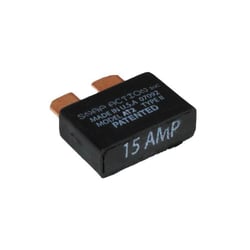

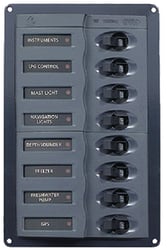

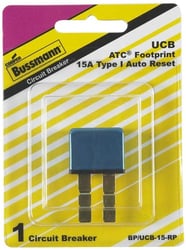

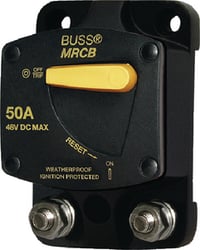

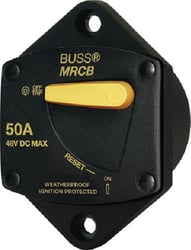
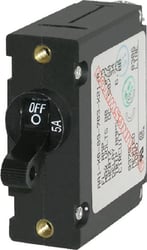
 Representative Photo, actual item may vary
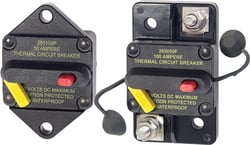

 Representative Photo, actual item may vary


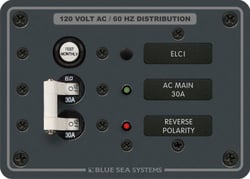
 Representative Photo, actual item may vary



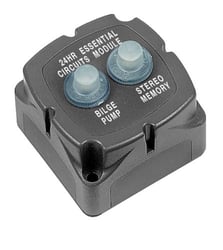
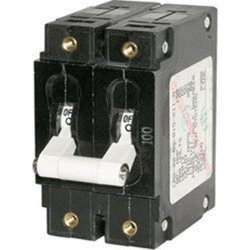
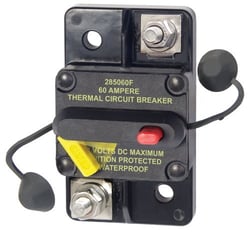
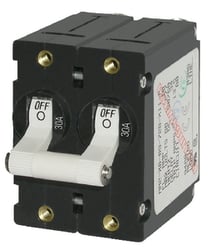
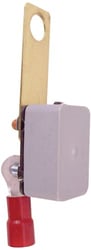
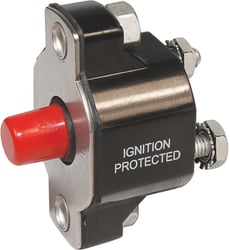
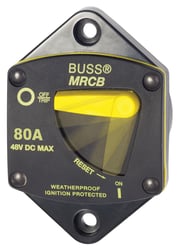
 Representative Photo, actual item may vary
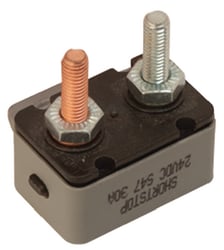

What Are RV & Marine Circuit Breakers?
A circuit breaker is the cornerstone of any safe electrical system on the water or on the road. At its core, a circuit breaker is an automatic safety switch that monitors current flow and instantly interrupts the circuit when that current exceeds a safe threshold. Whether you're running a bilge pump offshore or powering an air conditioner in your travel trailer, circuit breakers stand between normal operation and potentially catastrophic wiring failures.
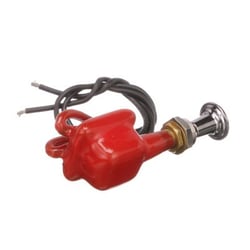
Unlike a fuse — which must be replaced after it blows — a circuit breaker can be reset and reused after the fault condition is cleared. This makes breakers far more convenient for marine and RV applications, where access to spare parts mid-voyage or mid-trip may be limited. Once the overcurrent cause is identified and resolved, restoring power is as simple as pushing a button or flipping a switch.
How Circuit Breakers Work
Most RV and marine circuit breakers rely on one of two core tripping mechanisms. Thermal (bimetallic) breakers use a metal strip that bends under heat generated by excess current, physically breaking the circuit. Response times typically range from a few seconds to a minute depending on how severe the overload is — ideal for protecting wiring from sustained overcurrents. Magnetic (hydraulic-magnetic) breakers use electromagnetic force to trip near-instantly in the event of a hard short circuit, making them the preferred choice for critical safety circuits like bilge pumps, navigation electronics, and starter systems.
Many breakers combine both mechanisms for broad protection across a range of fault conditions. When shopping, pay attention to whether a breaker is manual reset (requiring deliberate human action before power is restored) or automatic reset (which restores power once the breaker cools). Manual reset is generally preferred for safety-critical circuits, as it prompts the operator to investigate the cause of the trip before re-energizing the system.
Types of RV & Marine Circuit Breakers
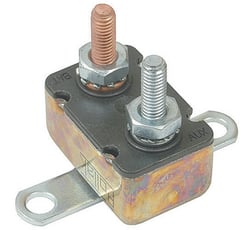
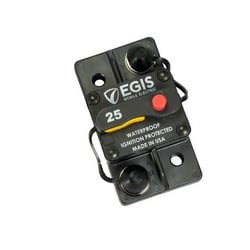
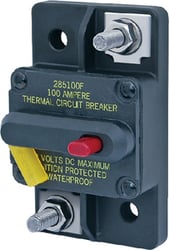
- Surface-Mount Breakers: Bolt directly to a bulkhead, transom, or mounting surface and are common for protecting individual high-current loads like trolling motors, inverters, and windlasses. Amperage ranges commonly span from 30A up to 250A or more.
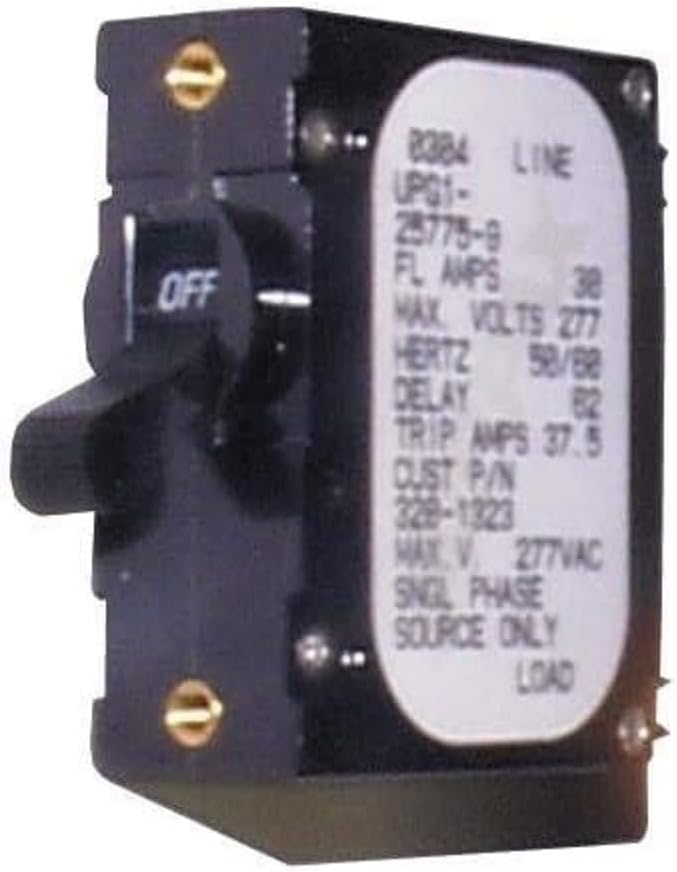
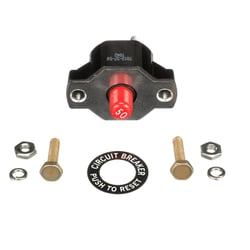
- Panel-Mount Breakers: Snap or screw into a distribution panel and are used to protect individual branch circuits — lighting, pumps, electronics, and appliances. Available in single-pole and double-pole configurations for 12V DC or 120V/240V AC systems.
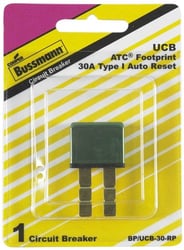
- Blade-Style Resettable Breakers: These drop directly into a standard ATO/ATC fuse block, providing resettable overcurrent protection without rewiring your existing fuse panel — a practical upgrade for both RV and marine fuse boards.
- GFCI & AFCI Breakers: Ground fault and arc fault circuit interrupter breakers offer an additional layer of safety, detecting dangerous leakage currents or arcing faults in AC wiring that standard overcurrent breakers won't catch.
Key Buying Considerations
Amperage rating is the most critical spec. A widely used rule of thumb is to size the breaker at no more than 125% of the circuit's continuous load current — this ensures protection of the wiring without nuisance tripping under normal operation. Voltage rating is equally important: a breaker rated only for 12V DC must never be used in a 24V or 48V system, as it may fail to safely interrupt a DC arc at higher voltages.
For marine environments especially, look for breakers with sealed or IP-rated housings, corrosion-resistant terminals, and vibration tolerance. Salt air and moisture accelerate metal fatigue and corrosion, so marine-grade construction is not optional — it's essential. Meeting ABYC E-11 electrical standards is a strong indicator that a breaker is engineered specifically for the demands of a vessel.
Finally, consider mounting style and reset mechanism before purchasing. Surface-mount units suit high-amperage inline protection, while panel-mount breakers organize multi-circuit distribution neatly. Whether you're building a new electrical system from scratch or replacing aging components, selecting the right breaker for each circuit protects your investment and keeps everyone on board safe.