



Garmin Network Expanders, Cables & Accessories
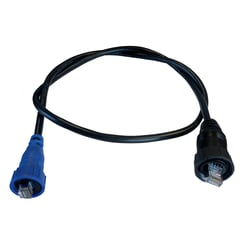
Shadow-Caster SCM-MFD-CABLE-GARMIN Garmin Ethernet Network Cable for Marine Lighting Control

Build a Seamless On-Board Electronics Network
Modern boats are packed with sophisticated electronics — chartplotters, radar units, sonar modules, autopilots, and weather receivers — and the only way to get the most out of that investment is to connect them all together. Garmin network expanders, cables, and accessories are purpose-built to do exactly that, forming the backbone of an integrated marine electronics ecosystem that lets every device talk to every other device in real time.
What Are Marine Network Expanders, Cables & Accessories?
A marine network is essentially a high-speed digital nervous system for your vessel. Network cables connect Garmin network devices to GPSMAP chartplotters and chartplotter/fishfinder network units, and can also be used to connect unit to unit. At the hub of more complex installations sits a network port expander. The GMS 10 network port expander, for example, allows you to connect multiple chartplotters and sensors over the Garmin Marine Network, and with its robust 100 MB switch, you can connect multiple multi-functional displays (MFDs) and sensors to the marine network.
Beyond raw port counts, speed matters. With this switch, you can gain the benefit of Ethernet-like data transfer speeds up to 10 times faster than some competitive systems. That throughput is what allows a radar sweep, sonar return, and live chart update to all appear simultaneously across multiple displays without lag.
Network accessories also include NMEA 2000 components — the industry-standard protocol for sharing data between onboard instruments. The Garmin NMEA 2000 Starter Kit has everything you need to build a basic NMEA 2000 network on your boat, including an NMEA 2000 drop cable, backbone cable, power cable, T-connectors, and male and female terminator connectors.
Why a Reliable Marine Network Connection Matters
Linking your GPSMAP chartplotters, GMR radars, GSD sonar modules, and more into one cohesive system means that waypoints, weather data, and fishfinder information are visible and shareable across every screen on the boat. Whether you're running offshore or navigating a busy harbor, a properly networked vessel dramatically reduces the need to duplicate instruments and eliminates blind spots in your situational awareness.
The marine environment is unforgiving on electronics. The rugged GMS 10 is specifically designed to withstand the corrosive marine environment — all connections are totally water resistant, and sealed covers keep harmful moisture away from unused data ports. Network cables feature RJ45 and weatherproof connections on both ends to maintain a reliable signal even in saltwater spray and rain.
Key Considerations When Shopping
- Compatibility: Garmin's marine network system uses Ethernet-style connections specific to Garmin products. Always confirm that cables and expanders match your specific chartplotter series before purchasing.
- Cable length: Garmin uses standard Ethernet cables with waterproof connectors, available in different lengths to match your boat's layout. Measure your runs carefully and choose the appropriate length to avoid slack or tension at connectors.
- Scalability: You can connect a second GMS 10 to the first one, and this daisy-chain method lets you expand your network to eight or more devices.
- Plug-and-play setup: The GMS 10 and the Garmin Marine Network are completely plug-and-play, which means all peripherals are automatically detected and readily accessible once connected to the network.
- Connector maintenance: Corrosion on connectors can develop over time in saltwater environments — inspect cable ends periodically and clean them with contact cleaner.
Shop Garmin Network Expanders, Cables & Accessories
Garmin is the definitive name in this category. As a leader in GPS and marine electronics technology, Garmin designs their network expanders, cables, and accessories specifically to integrate with their full ecosystem of GPSMAP chartplotters, GMR radar, and sonar modules — giving boaters a cohesive, high-performance solution engineered from the ground up for the marine environment.