



Mooring Anchors

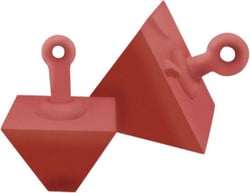
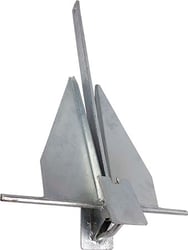
Seachoice 43940 Pyramid Anchor - 250 Lb Cast Iron Mooring Anchor for Boats 25-29 Feet

 Representative Photo, actual item may vary
 Representative Photo, actual item may vary
 Representative Photo, actual item may vary

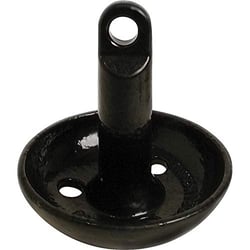
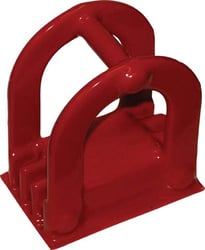
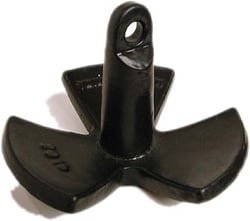
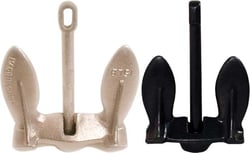
What Are Mooring Anchors?
A mooring anchor is the foundation of any permanent or semi-permanent boat-securing system. Unlike a standard hook anchor that you drop overboard for a quick stop, a mooring anchor is designed to stay on the seafloor indefinitely — connected via chain and rode to a floating buoy that your vessel ties off to. Mooring anchors are heavier, with higher holding capacities, and are built to withstand stronger currents, winds, and waves over prolonged periods compared to traditional temporary anchors.
The practical result: mooring is generally safer than dropping a casual anchor and costs less than renting a marina slip, making a well-chosen mooring anchor one of the best long-term investments a boat owner can make.
Types of Mooring Anchors
There are four primary anchor types used in mooring systems, each engineered for specific seabed conditions and vessel sizes:
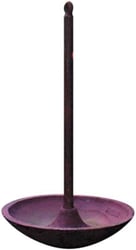
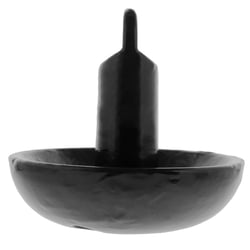
- Mushroom Anchors — The most common mooring anchor, shaped like an upside-down mushroom. They work by burying into the seafloor and creating suction, making them ideal for soft mud or silt bottoms. A 500-lb mushroom anchor can develop approximately 1,200 lbs of holding power once fully embedded. They are available in weights from 25 lbs up to 1,000 lbs or more for larger vessels.
- Pyramid (Dor-Mor) Anchors — A popular mushroom alternative, pyramid anchors embed more rapidly thanks to their concentrated, tapered shape. A 650-lb pyramid anchor can generate approximately 6,500 lbs of holding power, giving them an impressive holding-power-to-weight ratio. They work well in muddy and sandy bottoms and are particularly effective where bottom space is tight.
- Helix (Screw-In) Anchors — These feature a high-tensile steel shaft with large helical blades that are literally screwed into the substrate. Originally developed for the offshore oil industry, helix anchors have gained popularity with recreational boaters for their exceptional holding power relative to their size. They are also the most eco-friendly option, leaving minimal scour marks on sensitive seabeds. Installation typically requires a diver.
- Deadweight Anchors — The simplest type: large blocks of concrete or heavy metal that resist movement through sheer mass. They work on nearly any bottom type, including rocky substrates where other anchors struggle to grip. Although they offer a lower holding-power-to-weight ratio than mushroom or pyramid designs, a deadweight mooring that drags in a storm still holds well in its new position.
How a Mooring System Works
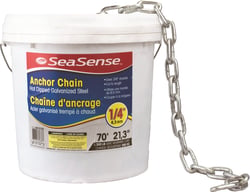
A complete mooring system consists of the anchor on the seafloor, a heavy ground chain running up to a mooring buoy at the surface, and a pennant line that your boat ties to. The ground chain serves a critical purpose: its weight keeps the pull on the anchor as horizontal as possible, which dramatically increases holding power. The mooring buoy must support roughly twice the suspended weight of the chain to stay visible at the surface.
For swing moorings — the most common recreational setup — one anchor and one buoy allow the boat to weathervane freely with wind and tide changes. This requires adequate swinging room but is simple, reliable, and widely used in mooring fields and protected bays.
Choosing the Right Mooring Anchor
Three key factors should guide your selection:
- Bottom Type — Mushroom and pyramid anchors excel in mud and sand; deadweight blocks are better suited to rocky or pebbly substrates where other designs can't dig in.
- Vessel Size and Weight — A common rule of thumb is that anchor weight should be 5 to 10 times your boat's length in feet. Always err on the side of heavier when a permanent installation is involved.
- Scope — The ratio of rode length to water depth should be at least 3:1 under normal conditions. A shallower pull angle means significantly more holding power, so don't skimp on chain length.
Regular inspection of all components — chains, shackles, swivels, and the anchor itself — is essential for safety. Chains corrode invisibly near the bottom link, and failed mooring gear is one of the recurring contributors to boat losses each season.