



Rule Industries Bilge Pump Float Switch

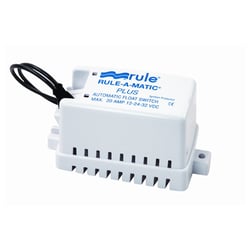
A bilge pump is only as dependable as the switch that tells it when to run. Rule has built its name around submersible bilge pumps since 1965, and its float switches are designed as companions to those pumps. Rule's own literature describes its float switches as suited to pumps from 360 GPH up to 4000 GPH, so there is a match for everything from a small tender to a large offshore vessel. This page focuses on Rule Industries bilge pump float switches. For the wider lineup, visit the Rule Industries brand page, or browse the full Bilge Pump Float Switch category to compare other makers.
Key Rule Float Switch Designs
Rule's float switch range centers on a few well-known families, each aimed at a slightly different installation:
- Rule-A-Matic: The classic Rule float switch. The current version replaced the mercury used in earlier generations with silver tin oxide contacts. It has a larger float for added buoyancy and a snap-in base that makes removal for cleaning or inspection simple. Sealed wiring exits from the top through a rubber grommet for strain relief and to help keep it dry.
- Rule-A-Matic Plus (Model 40A): An enclosed, mercury-free switch with an impact-resistant cover and integrated strainer that help keep debris from jamming the float. An external lever lets you lift the float by hand to test operation. It is rated for pumps drawing up to 20A and uses 14-gauge, abrasion-resistant marine-grade wire.
- Super Switch: A high-volume, mercury-free switch rated for 12 to 32 volts DC at up to 20 amps. Its large float provides more buoyancy and less on-and-off cycling, and it uses no diaphragms, points or reeds. An optional guard helps keep flotsam from holding the switch in the on or off position.
Why Float Switch Design Matters
Bilge switches work in a harsh environment of oily water, loose debris and constant vibration. Rule's approach addresses the most common failure points. Larger floats reduce short-cycling, which wears pumps and drains batteries. Enclosed housings and strainers protect the float from jamming. Mercury-free contacts keep the switch environmentally responsible. Test levers and removable bases make routine checks practical, which matters because a bilge switch should be exercised regularly rather than trusted blindly.
Choosing the Right Rule Switch
- Match the amperage: Confirm the pump's running current falls within the switch rating, and use a fuse as the manufacturer recommends.
- Match the voltage: Check whether your system is 12V, 24V or 32V DC. The Super Switch covers all three.
- Consider debris: Boats that collect fibers, shavings or fishing debris in the bilge benefit from the enclosed cover and strainer of the Rule-A-Matic Plus.
- Add manual control: Rule also offers a three-way lighted rocker panel switch that overrides an automatic or float-switch-controlled pump from the helm, with a spring-back manual position so the pump does not run continuously.
Pairing a Rule float switch with a Rule submersible pump keeps the system within one engineering family. Whichever model you choose, mount it at a height that triggers the pump before water reaches the engine or batteries, and test it at the start of each boating season.