



Distress Flags
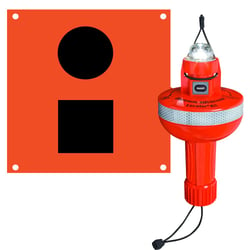

What Are Marine Distress Flags?
A marine distress flag is one of the most fundamental visual signaling tools any boater can carry. Recognized internationally, the classic orange distress flag — typically bearing a black square and circle on a bright orange field — is an internationally understood signal that a vessel or person is in distress and requires assistance. Simple, silent, and requiring no batteries or electronics, a distress flag is a reliable backup when flares are exhausted, radios fail, or low-profile signaling is preferable.
Why Distress Flags Matter for On-Water Safety
Whether you're cruising coastal waters, navigating inland lakes, or heading offshore, being prepared for an emergency is a responsibility every boater takes seriously. Distress flags are a key component of any well-stocked marine safety and survival kit. Unlike pyrotechnic flares, which are single-use and subject to expiration dates, a distress flag can be used repeatedly and stored indefinitely without degradation — making it an extremely cost-effective safety investment.
In the United States, the U.S. Coast Guard recognizes the orange flag with a black square and circle as an approved daytime visual distress signal (VDS) for use on coastal and inland waters. Many boating safety regulations require vessels to carry approved visual distress signals, and a distress flag often satisfies the daytime requirement of those regulations. Always check the specific requirements for your vessel type and operating area.
When and How to Use a Distress Flag
A distress flag is most effective in daylight when it can be spotted against a blue sky or dark water. To maximize visibility, wave or display the flag from the highest point on your vessel — the flybridge, a raised mast, or simply held aloft by hand. Bright orange is specifically chosen because it contrasts sharply with virtually every natural environment, making it visible from aircraft and other vessels at considerable distance.
Distress flags are particularly valuable in situations where pyrotechnics may be dangerous — such as when there is fuel on the water — or when you need to signal over an extended period without exhausting your supply of flares. For coastal and lake boaters, keeping a distress flag as part of a layered safety strategy alongside an EPIRB, VHF radio, and flare kit is considered best practice.
What to Look for When Buying a Distress Flag
- Visibility: Look for bright, UV-resistant orange fabric that won't fade after prolonged sun exposure.
- Size: Larger flags are more visible. Standard distress flags are typically at least 16 x 24 inches.
- Durability: Marine environments are harsh. Flags should be constructed of weather-resistant, water-resistant materials.
- Compliance: Confirm the flag meets U.S. Coast Guard standards for visual distress signals if you need it for regulatory compliance.
- Storage: A compact, packable flag that stores easily in a dry bag or safety kit is ideal for space-conscious boaters.
Top Brands in Marine Distress Flags
SafeTboy is a safety-focused brand known for producing a broad range of personal safety products. Their entry into marine signaling reflects a commitment to practical, no-frills safety solutions designed to be there when you need them most.