



Mooring Pendants
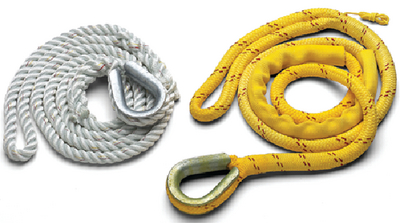 Representative Photo, actual item may vary

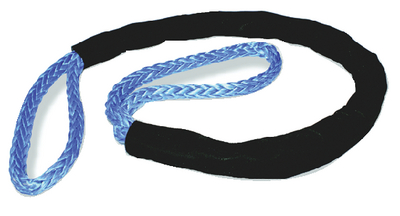 Representative Photo, actual item may vary
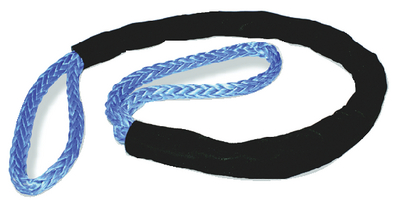 Representative Photo, actual item may vary
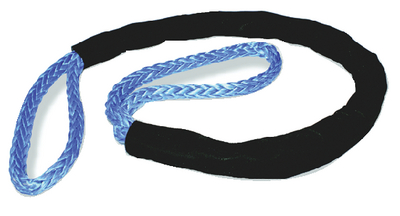 Representative Photo, actual item may vary
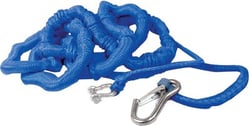
Tuggy Products SWAB-RB Shallow Water Anchor Buddy Blue Stretching Mooring Line 7ft to 21ft

 Representative Photo, actual item may vary
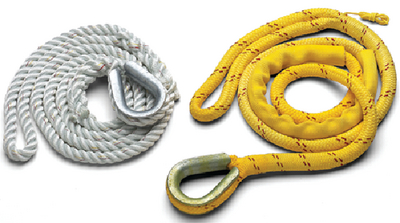
New England Ropes C539K6-32-00020 Mooring Pendant 1 Inch x 20 Feet with Thimble
What Are Mooring Pendants?
A mooring pendant (also spelled and pronounced "pennant") is the critical last link between your boat and a permanent mooring system. Mooring pendants are part of permanent moorings which consist of a large anchor, anchor chain, a buoy on the water's surface, and a mooring pendant that is either shackled to the mooring chain directly under the buoy or to the top of the buoy. In simpler terms, it's the line you actually grab when picking up a mooring — and the component that takes the most wear and abuse of any part of the system.
A mooring pendant is a relatively short length of line used to connect a vessel to a mooring buoy — usually via the boat's bow eye or bow cleats — allowing the boat to free-wheel about the mooring depending on wind direction. When a boat "picks up a mooring," it is the mooring pendant that the boater grabs with a boat hook and draws up to the boat. To make this process easier, mooring pendants often include a pickup buoy that keeps the mooring pendant at the surface of the water and makes it easier to grab.
Why Mooring Pendant Quality Matters
Because the pendant is the sole connection between your vessel and its mooring, it must be strong enough to handle not just steady loads but sudden shock loads from wind, waves, and wakes. The pendant attaches the chain to the boat, and large-diameter three-strand nylon line is commonly used because its inherent elasticity — stretching about 10 percent under a load equaling 20 percent of its tensile strength — allows it to act as a shock absorber.
Chafe is the number one enemy of any mooring pendant. Chafing of pennant line and corrosion of chain and shackles are most often cited as causes of failed moorings. When a bow raises up in a storm, the tension and friction over the bow chock can be intense and can lead to accelerated chafe and physical melting of the fibers. This is why many pendants are fitted with protective chafe guards wherever they pass through a bow chock or over a roller.
Types of Mooring Pendants
Traditional mooring pendants typically consist of a length of three-strand or double-braid nylon line with a spliced eye at one end and thimble spliced on to the other end. Nylon line is preferred due to its elasticity, which helps absorb shock loads. These pendants are sold in various lengths and diameters to accommodate boats of different sizes and displacements.
Polyester line, Dyneema line, or stainless steel wire is preferred by some boaters for better chafe resistance. One of the drawbacks of mooring pendants made of elastic nylon line is that, in addition to suffering abrasion where they run through a chock, constant stretching generates heat which can lead to line fatigue that shortens the life of the line. High-performance synthetic options address this by minimizing stretch and reducing friction-generated heat at the chock.
Mooring bridles are often used to attach a boat to a mooring pendant. The purpose of a mooring bridle is to distribute the load evenly between the two points of attachment on the boat, reducing the strain on any single cleat or bow fitting — a particularly smart setup for powerboats and multihulls.
Choosing the Right Mooring Pendant
Selecting the correct pendant involves several key factors:
- Length: Length should be about 2.5 times the boat's freeboard. A pendant that is too short will generate dangerous chafe loads at the chock during heavy weather.
- Diameter: Diameter should be as large as is practical — but it must be able to fit through bow chocks and around a bow cleat.
- Material: Choose nylon for maximum shock absorption in calmer conditions, or low-stretch synthetics and coated lines for high-chafe environments and exposed anchorages.
- Hardware: A typical line will have a dock line eye splice for connecting to the boat's cleat or a hard eye for connecting to the boat's bow eye via hardware. On the other end, a hard eye with a stainless steel swivel hook, spring clip, anchor swivel, or shackle for making fast to the buoy connection.
Maintenance and Safety
Inspect your pendant every season and replace it at the first sign of chafe — UV and salt degrade lines faster than you may think. Running a dual-pendant setup with unequal lengths is a widely recommended practice; if one pendant fails, the backup prevents the boat from going adrift. No matter the conditions, no mooring system is any good unless the cleats or strong points on your vessel are up to the task — be sure your mooring cleats, Samson post, or mooring bit are adequately backed with substantial backing plates and solidly mounted into your deck.