



Seam & Bedding Compounds / Putties
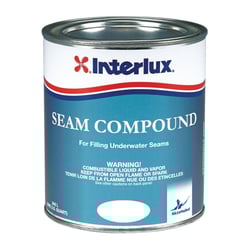
Interlux Y31/QT Seam Compound White - Flexible Hull Seam Filler for Wooden Boats

Understanding Seam and Bedding Compounds
Seam and bedding compounds play a critical role in creating watertight seals that accommodate the movements associated with stress and temperature change while maintaining seal integrity. These specialized putties are essential for properly installing deck hardware, portlights, hatches, and trim pieces where water intrusion must be prevented. Used to bed deck hardware and joiner work, these compounds offer easy application and long-lasting performance.
Unlike rigid sealants that can crack under stress, bedding compounds remain somewhat pliable after curing, creating a gasket-like barrier between mating surfaces. This flexibility is crucial for applications subjected to vibration, thermal expansion, and structural flexing. These materials are ideal for structural filling, fitting, bonding, and bedding, working well with fiberglass, wood, metal, polyester laminates, and core materials suitable for use both above and below the waterline.
Applications and Benefits
Professional boat builders and vehicle customizers rely on seam and bedding compounds for numerous critical installations. These products create reliable seals around through-hull fittings, cleats, railings, access hatches, and exterior trim. The compounds fill microscopic irregularities in mating surfaces, preventing moisture from wicking into core materials or causing corrosion of metal substrates.
Quality bedding compounds offer several performance advantages over household caulks or silicones. They maintain adhesion to surfaces that experience marine environments or automotive chemicals, resist degradation from fuel and oil exposure, and can often be sanded and painted for a professional finish. Many formulations also provide some insulating properties when bedding dissimilar metals, helping prevent galvanic corrosion.
Choosing the Right Product
Selecting the appropriate bedding compound depends on your specific application requirements. Consider whether the installation needs to be easily disassembled for maintenance, as some compounds cure to a more removable consistency than structural adhesive sealants. The substrate materials matter too—certain formulations work better with wood, while others excel on fiberglass or metal surfaces.
Working time and cure rate are practical considerations for any project. Some compounds remain workable for extended periods, allowing careful positioning of hardware, while fast-curing formulas minimize downtime. Environmental exposure also influences product selection, as underwater applications demand different performance characteristics than above-waterline or interior installations.
Top Brands in Seam and Bedding Compounds
When shopping for professional-grade bedding compounds, Interlux Paint stands out as a trusted manufacturer. Interlux, a division of AkzoNobel, is a world-renowned manufacturer of high-performance marine coatings with a reputation built on over a century of innovation in marine protection products. Interlux became synonymous with some of the highest standards in its field, offering a variety of products designed to improve, beautify, and protect all types of vessels.