



Turnbuckles & Boots
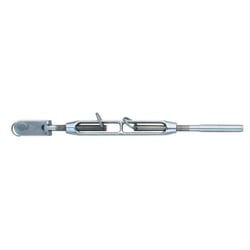
C. Sherman Johnson 27-316 Open Body Hand Crimp Lifeline Turnbuckle for 3/16" Wire

 Representative Photo, actual item may vary
C. Sherman Johnson 26-412 Closed Body Lifeline Turnbuckle with Hand Crimp Terminal for 1/8" Wire

What Are Sailing Turnbuckles & Boots?
Turnbuckles are among the most critical components in a sailboat's standing rigging system. Turnbuckles and boots work together to keep your mast properly tensioned, protected, and performing at its best — whether you're daysailing on calm inland waters or pushing hard offshore.
At their core, turnbuckles are adjustable mechanical tensioners. They feature two oppositely threaded rod ends that thread into a central barrel body. As the barrel is rotated, both ends draw inward or extend outward simultaneously, allowing the sailor to precisely increase or decrease tension along a shroud, stay, or lifeline. This dual-thread design means a single rotation of the body adjusts both ends at once, making rig tuning fast and accurate.
The applications of turnbuckles span the entire standing rig. Shrouds — the wires running from the mast to the sides of the hull — rely on turnbuckles for lateral support and tune. Forestays and backstays, which control fore-and-aft mast rake, also depend on them. Even lifelines use turnbuckles to maintain proper tension along safety rails. Without correctly tensioned turnbuckles, a mast can develop unwanted movement, sails lose their optimal shape, and in extreme cases, rigging integrity can be compromised.
Understanding Turnbuckle Boots
A turnbuckle boot is a protective sleeve — typically made from rubber, vinyl, or a similar flexible material — that fits over the turnbuckle body and threads. Exposed threads are vulnerable to UV degradation, saltwater corrosion, and physical chafe against sails, sheets, and crew gear. A well-fitted boot shields these threads, extends the life of the fitting, and prevents the frustrating situation of corroded threads that resist adjustment. Boots also eliminate sharp thread edges that can snag sails and damage running rigging — an important consideration for racing sailors focused on clean deck work.
What to Look for When Buying Turnbuckles
- Material: Marine-grade stainless steel (typically 316 alloy) is the standard for end fittings, offering excellent corrosion resistance. Turnbuckle bodies may use forged bronze or aluminum bronze for added resilience under high loads.
- End configuration: Jaw-to-jaw, eye-to-eye, jaw-to-swage, and toggle configurations serve different rigging termination needs. Match your end fittings to your existing chainplates and wire terminals.
- Thread size and wire diameter: Always match the turnbuckle's rated wire diameter to the standing rigging wire it will be used with. Undersized hardware is a safety risk.
- Locking provisions: Look for cotter pins, locking rings, or proprietary pin-lock systems to prevent turnbuckles from backing off under sailing loads and vibration.
- Open vs. closed body: Open-body (tubular) turnbuckles allow you to visually confirm thread engagement and check for corrosion without disassembly. Closed-body styles offer a cleaner appearance.
C. Sherman Johnson – Turnbuckles & Boots
C. Sherman Johnson is the benchmark for American-made sailing turnbuckles. Founded in 1958, the company has been designing and manufacturing rigging hardware for over six decades, with a product range that covers everything from small dinghy fittings to offshore cruiser hardware. Their turnbuckles are constructed from T-316 stainless steel end fittings paired with forged silicon bronze bodies — a combination chosen for its resistance to galling under the high, sustained loads common in standing rigging. From tubular closed-body styles to traditional open-body jaw-to-jaw designs, C. Sherman Johnson offers one of the most comprehensive turnbuckle lineups in the marine industry, making them a go-to choice for boat builders, riggers, and DIY owners alike.