



VHF Emergency Antenna
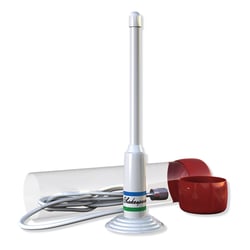

What Is a VHF Emergency Antenna?
A VHF emergency antenna is a backup marine antenna designed to keep you connected to rescue services, the Coast Guard, and other vessels when your primary onboard antenna fails. Whether due to a lightning strike, storm damage, or equipment failure, losing your main antenna in an open-water situation can be life-threatening — making a dedicated emergency backup one of the most important pieces of safety gear any boater can carry.
VHF emergency antennas are compact, portable, and built to deploy quickly under stress. In addition to a permanently installed marine VHF antenna, an external antenna should be carried on board in case of emergencies, such as if a lightning strike damages the installed antenna. The goal is simple: maintain the ability to call for help no matter what happens to your fixed equipment.
Why Antenna Height and Quality Matter
Marine VHF radios operate on very high frequency (VHF) bands, allowing boaters to communicate with other vessels, shore stations, and emergency services over distances typically up to 20–30 miles, depending on conditions and antenna height. That range is heavily dependent on how high your antenna is elevated above the water.
Most emergency antennas rely on you using some initiative to help them gain a decent signal by hoisting them as high as possible above sea level. In general, the higher the antenna is, the further the radio waves will be able to travel — which is why most VHF antennas are mounted on the boat's highest point. In an emergency situation, improvising a high mounting point — a boat hook, fishing rod, or mast — can significantly extend your effective communication range.
The best radio device can only ever function to its maximum potential if the VHF antenna is also of high quality. An underpowered or damaged emergency antenna can mean the difference between a Mayday call that gets through and one that doesn't.
Key Considerations When Shopping for a VHF Emergency Antenna
- Compatibility: Ensure the antenna connector type is compatible with your handheld VHF radio. Many emergency antennas include adapters for the most common connector types.
- Channel 16 Optimization: Channel 16 (156.800 MHz) is the international distress, safety, and calling frequency — look for antennas specifically tuned to this channel for best distress call performance.
- Build Quality: Constructed with marine-grade materials, including fiberglass and stainless steel, VHF antennas are built to withstand harsh conditions such as saltwater exposure, UV rays, and vibration.
- Compact Storage: Emergency antennas should stow easily in a grab bag or emergency kit without taking up valuable space on a small vessel.
- Deployment Speed: In an emergency, every second counts. Choose an antenna that can be put into service with minimal setup.
Top Brands in VHF Emergency Antennas
When it comes to trusted marine communication equipment, Shakespeare Antennas stands in a class of its own. With decades of experience engineering marine-grade antenna systems, Shakespeare is a go-to name for boaters who demand reliability when it matters most. Their VHF antenna lineup is known for rugged construction and consistent signal performance in demanding offshore environments.