



Carbon Cannisters

What Are Carbon Canisters and Why Do They Matter?
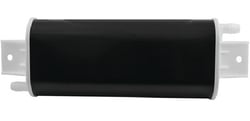
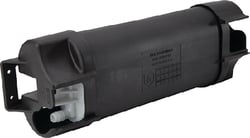
An activated carbon canister is used to capture hydrocarbon vapor emissions from the fuel tank as part of an evaporative emission control system (EVAP). While most boaters and RV owners may never give them a second thought, these compact components play a critical role in both environmental compliance and fuel system performance.
Hydrocarbon molecules are attracted to and stored on the surfaces of carbon pores by a physical phenomenon known as adsorption. Canister filling — or adsorption — occurs during two major events: thermal tank content expansion and refueling. The carbon scrubs the hydrocarbons from the fuel vapor, eliminating fuel odors and contributing to cleaner air.
Canister purging in the marine industry occurs passively, based on vacuum created during cooling of the gas and gas tank and engine use of fuel. Tank vacuum will pull ambient air through the canister, resulting in desorption or purging of hydrocarbons from the canister. This passive self-regenerating cycle is one reason the technology — long proven in automotive applications — translates so well to boats and RVs.
EPA Compliance: A Requirement, Not an Option
Diurnal emissions from marine SI fuel tanks may not exceed 0.40 g/gal/day as measured under EPA test procedures. If emission controls rely on carbon canisters, they must be installed in a way that prevents exposing the carbon to water or liquid fuel.
EPA Certified Carbon Canisters meet EPA diurnal emission control requirements, and properly installing an EPA Certified diurnal emission control component eliminates the need for a builder to submit test results or an application to the EPA for vessel certification. For boat builders, RV manufacturers, and DIY repairers alike, selecting a pre-certified canister simplifies the compliance process considerably.
What to Look for When Choosing a Carbon Canister
- Canister sizing: Canister sizing is dictated by both boat and tank size. Always match the canister's rated capacity to your fuel tank volume.
- Liquid protection: The carbon canister may clog or become contaminated and must be protected from water or other fluids. The system must incorporate design features to prevent liquid gasoline from reaching the canister during refueling or as a result of fuel sloshing, expansion, or severe tip angles of the boat.
- Mounting location: If the canister is mounted in the engine compartment, a heat shield is required to pass the Coast Guard fire test. For non-engine compartment locations, the heat shield is not required.
- Carbon bed integrity: Over time, vehicle vibrations, temperature changes, and motion can cause carbon particles to shift and erode against each other. This erosion can create open flow paths, allowing hydrocarbon vapors to escape without being adsorbed, leading to increased emissions.
- Ethanol compatibility: Look for canisters rated for use with modern ethanol-blended fuels, which are now standard at most marinas and fuel stations.
Top Brands in Marine & RV Carbon Canisters
Attwood Marine is the go-to name in marine carbon canisters. For more than 100 years, Attwood has been proud to serve the parts and accessory needs of the marine industry, partnering with boaters to design, manufacture, test, and distribute a complete line of products. All Attwood carbon canister systems are designed to ensure liquid fuel or water does not reach the canister and are compatible with Jerry Can and marine nozzle refueling.