



Fairing Compounds
 Representative Photo, actual item may vary

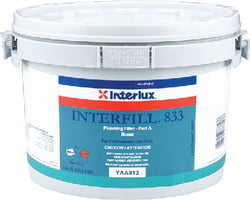
Interlux Paint YAA813HG Interfill 833 Fine Finishing Fairing Compound Part A Base 1/2 Gallon


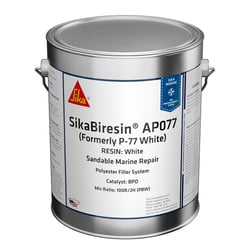

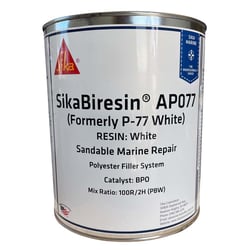
Sika 606547 SikaBiresin AP077 White Polyester Filler and Fairing Compound - 1 Gallon (BPO Hardener Required)
What Are Marine Fairing Compounds?
Boat fairing is the process of correcting surface irregularities on a hull or deck to create an even, continuous profile. Fairing compounds — sometimes called fairing putties — are the workhorses of that process. They fill low spots, seams, gouges, cracks, and other imperfections, preparing the substrate for primers and topcoats so the finished surface is both visually clean and hydrodynamically efficient.
Whether you're addressing a minor gelcoat scrape from a dock encounter or reshaping an entire keel, the right fairing compound makes the difference between a surface that looks repaired and one that looks factory-fresh. These materials are applied as a thick paste, shaped to match the surrounding contour, allowed to cure, and then sanded smooth before priming and painting.
Epoxy vs. Polyester Fairing Compounds
Most marine fairing compounds are built around one of two resin systems: epoxy or polyester. Epoxy fairing compounds offer better adhesion, superior water resistance, and a greater resistance to cracking — qualities that make them the preferred choice for repairs below the waterline. Epoxy is 100% waterproof when cured, which matters enormously on any surface in constant contact with water. Polyester compounds, by contrast, cure faster and are well-suited for cosmetic repairs above the waterline, where their lighter weight and easy sandability shine.
Many modern fairing compounds come as two-part kits with color-coded components, making it easy to confirm a thorough mix before application. Once mixed, the compound can be spread onto fiberglass, wood, steel, or aluminum surfaces — and the best formulas do so without sagging, even on vertical surfaces.
What to Consider When Choosing a Fairing Compound
- Above vs. below the waterline: Epoxy-based products are strongly preferred for submerged surfaces due to their waterproof cure and stronger bonds.
- Depth of repair: Heavy-build profiling fillers can fill deep voids in a single coat; glazing or finishing compounds are better suited for the final leveling pass over minor imperfections.
- Substrate compatibility: Confirm the compound is rated for fiberglass, wood, aluminum, or steel as appropriate for your hull.
- Cure time and working window: Fast-cure formulas allow multiple coats in a single day; standard formulas offer a longer working time, which is helpful for large fairing jobs.
- Sandability: Compounds thickened with microballoons or lightweight fillers are significantly easier to sand to a fair surface after curing.
Top Brands in Marine Fairing Compounds
Pettit Paint is a long-trusted name in marine coatings, and their EZ-Fair Epoxy Fairing Compound is a go-to for boaters tackling hull repairs. With high chemical and water resistance, EZ-Fair is non-sagging, non-shrinking, and sands to a smooth finish — and its quick-cure formula allows multiple coats to be applied and sanded in a single day, making it a core part of Pettit's Gelcoat Blister Repair System.
Interlux Paint brings professional-grade performance with their Interfill line. The Interfill 830 is a premium profiling compound with an extremely low density — one of the lightest epoxy fillers on the market — and an extended pot life that makes it ideal for profiling large areas both above and below the waterline on steel, aluminum, and composite hulls. Interlux also offers Interfill 833, a finishing filler used as the second stage in a fairing project after the 830 has established the profile.
Awlgrip rounds out the professional tier with their AwlFair fairing compound, a two-component epoxy filler with excellent sag resistance and film-build capability designed for large fairing surfaces. Awlgrip products are a standard in professional yacht finishing, making their fairing compounds a natural choice for anyone working within the broader Awlgrip topcoat system.
Sika brings its chemistry expertise to the marine fairing category with products engineered for reliable adhesion and durability across multiple substrates, including fiberglass and composite hull materials commonly found in both boats and RVs.