



HF/SSB Antennas

What Are HF/SSB Antennas and Why Do They Matter?
When you venture beyond the horizon, a standard VHF marine radio quickly reaches its limits. HF/SSB (High Frequency / Single Sideband) antennas are the key hardware component that makes long-range radio communication possible for offshore sailors, blue-water cruisers, and coastal adventurers who need a reliable lifeline when no other infrastructure is available.
The fundamental difference between VHF and HF comes down to physics. VHF signals travel in a relatively straight line — once you're beyond roughly 30 nautical miles from shore or another vessel, those signals simply can't reach. HF/SSB radios, by contrast, operate in a much lower frequency range — typically 1.6 to 30 MHz — and their signals can actually refract off the upper atmosphere, allowing them to travel over vastly greater distances. Under favorable conditions, worldwide communication is possible.
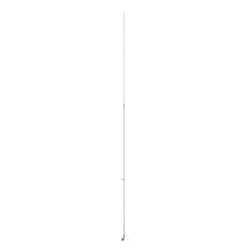
The antenna is the make-or-break element of any HF/SSB installation. No matter how sophisticated your radio transceiver, a poor antenna will rob you of range and clarity. A properly matched and installed HF/SSB antenna — often a tall fiberglass whip mounted on the stern or backstay — works with an automatic antenna tuner to optimize performance across the wide HF frequency range, ensuring your transmissions get out cleanly whether you're calling a weather net, sending email via a radio modem, or placing a distress call.
What Can You Do With an HF/SSB System?
HF/SSB radio is far more than a voice communication tool. Once your antenna is properly installed and paired with a compatible transceiver, it becomes a gateway to a wide range of services. Email, weather facsimile (weatherfax), NAVTEX updates, and two-way voice communication with other vessels or shore stations are all accessible through the same antenna. For offshore passagemakers, SSB radio is also the backbone of cruising nets — group broadcasts where hundreds of sailors share weather forecasts, position reports, and passage news simultaneously, something satellite systems simply can't replicate.
Key Considerations When Choosing an HF/SSB Antenna
- Length: Longer antennas generally perform better at lower HF frequencies. Common marine configurations range from 17.5 to 23 feet.
- Power handling: Verify the antenna is rated for the output power of your transceiver — many marine HF/SSB radios transmit at up to 150 watts, and some installations can push to 1 kW.
- Construction: Look for conductors permanently sealed in fiberglass, corrosion-resistant fittings, and hardware engineered for the salt-spray marine environment.
- Antenna tuner compatibility: An automatic antenna tuner is essentially required for most marine HF/SSB installations to optimize performance across the full frequency range.
- Mounting: Proper mounting and a solid RF ground plane are just as important as the antenna itself for achieving maximum range.
Top Brands in HF/SSB Antennas
When it comes to trusted names in marine HF/SSB antennas, Shakespeare Antennas stands at the top of the list. With a heritage in marine antenna manufacturing spanning decades, Shakespeare has built products engineered to withstand harsh marine environments while delivering superior performance. Their Classic SSB lineup — including the widely respected Style 390, often referred to as the industry standard — features full-length conductors with no loading coil, permanently sealed in white fiberglass, and rated to handle input power up to 1 kW. The Galaxy® series expands on this with hand-crafted construction designed for commercial vessels, yachts, and larger sport fishing boats. If you're outfitting an offshore passage-maker, Shakespeare's HF/SSB antenna selection is the natural starting point.