



Hubbell 100A Products
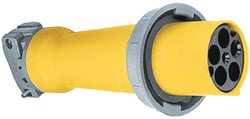

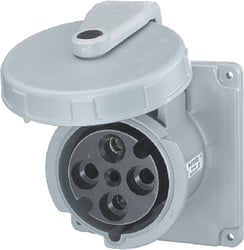
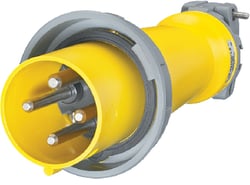
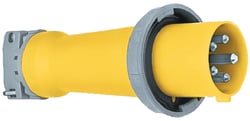
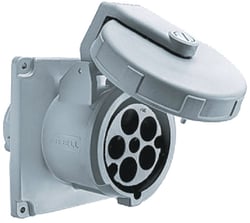
Hubbell 100A Shore Power: Heavy-Duty Electrical Connections for Marine & RV Use
When a large vessel or high-demand RV needs to draw serious power from a dock pedestal or campground hookup, 30-amp and 50-amp connections simply aren't enough. That's where 100-amp shore power products come in — purpose-built electrical components designed to deliver maximum capacity safely, reliably, and in environments where moisture, salt air, and vibration are constant challenges.
What Are 100A Shore Power Products?
100-amp shore power products form the critical link between a marina's power pedestal or an RV park's electrical supply and the vessel or vehicle requiring electricity. This category encompasses a family of closely related components that must all work together as a system:
- Plugs & Connectors: The male and female ends that physically mate to transfer current. At 100 amps, these use a Pin and Sleeve design with gasketed locking rings to maintain a watertight seal even under the stress of wind, wave, and dock movement.
- Receptacles & Inlets: Dockside receptacles mount to pedestals or dock boxes to receive the plug from the shore cord, while boat-side inlets are installed through the hull to accept the connector end of the cable. Spring-loaded covers are common at this amperage rating to deliver an IP67-rated watertight closure when tightened.
- Shore Power Cable Sets: The heavy-gauge cordsets that bridge the distance between pedestal and vessel. At 100 amps, cables are typically constructed with #2 AWG copper conductors and rated to 105°C, using rugged STOW jacket material that is oil-, water-, and UV-resistant.
- Back Boxes & Accessories: Enclosures and mounting hardware that protect receptacle bodies from the elements, available in cast aluminum or engineered thermoplastic for maximum corrosion resistance.
Why 100A? Understanding High-Amperage Shore Power
While 30-amp service is common for smaller vessels and most RVs, and 50-amp service handles larger boats comfortably, 100-amp shore power is reserved for high-demand applications. Large yachts, liveaboard vessels, and certain commercial or charter boats may simultaneously run multiple air conditioning systems, electric cooking appliances, battery charging banks, entertainment systems, and other high-draw equipment that pushes well beyond what a 50-amp connection can sustain.
100-amp products are available in two primary voltage configurations: 125/250V 3-pole, 4-wire systems for most domestic marine applications, and 120/208V 4-pole, 5-wire systems for vessels equipped with an onboard isolation transformer. Selecting the correct configuration for both the boat and the marina pedestal is essential — mismatched connections can result in equipment damage or a failed connection.
Key Considerations When Shopping 100A Shore Power Products
Because all components in a shore power system must be compatible, it pays to understand a few important shopping factors before purchasing:
- Amperage & Voltage Rating: Confirm both the amperage (100A) and the voltage configuration (125/250V vs. 120/208V) of your existing inlet or pedestal before ordering replacements or additions.
- Wire vs. Pole Count: 3-pole 4-wire and 4-pole 5-wire systems use physically different pin-and-sleeve geometries. They are not interchangeable.
- Watertight Rating: Look for components with gasketed locking rings and spring-loaded covers that achieve IP67 ratings — especially critical for boat-side inlets that may be exposed to spray or splashing.
- Corrosion Resistance: Marine-grade materials such as reinforced Zytel nylon and UV-stabilized thermoplastics are engineered specifically to resist the saltwater and chemical exposure common in marina environments.
- Cable Length: Shore power cable sets are available in a range of lengths. Measure the distance from your slip's pedestal to your boat's inlet carefully, accounting for deck routing, before selecting a cord length.
Whether you're upgrading an existing dockside pedestal, replacing a worn boat-side inlet, or building out a complete 100-amp shore power system from scratch, choosing components rated, tested, and built for the marine environment is the only approach that ensures long-term safety and performance.