



Vinyl-Ester Resin

What Is Vinyl-Ester Resin and Why Does It Matter?
Vinyl-ester resin occupies a critical middle ground in the world of marine composites. While epoxy and polyester resins dominate the boat-building industry, vinyl-ester resin offers a middle ground in terms of properties and price. Vinyl-ester resins are a hybrid: they are made by reacting epoxy resin with unsaturated carboxylic acids, then dissolved in a monomer like styrene. The result is a resin that punches above its weight class for marine protection.
Performance Where It Counts
Use vinyl ester when you need higher chemical and water resistance than polyester but want simpler processing and lower cost than many epoxies. That balance is exactly what makes it so valuable for boat owners and marine technicians. Vinyl-ester resins combine the strength of epoxy resins with the processing ease of polyester resins, providing a balanced performance profile with enhanced resistance to water ingress and chemical attack.
Vinyl-ester resin provides excellent resistance to corrosion and water penetration, and osmotic blistering is often prevented due to its low permeability — keeping boat structures intact and durable for extended periods. Vinyl-ester resins also offer excellent tensile and flexural strength, allowing them to handle dynamic loads and harsh conditions.
Where Vinyl-Ester Resin Is Used on Boats
Typical uses include below-waterline laminates, osmosis/blister repairs, bilge areas, structural reinforcements with fiberglass, and corrosion-prone compartments such as tanks and sumps. By incorporating a vinyl-ester skin between the gel coat and the glass/polyester laminate — or using it for the entire laminate — boat builders can effectively prevent hydrolysis-induced osmotic blistering.
Pairing vinyl ester with fiberglass reinforcement yields a composite offering strong interlaminar bonding and improved resistance to water absorption compared with many polyester laminates, helping maintain laminate integrity. These qualities make it ideal for repairing tank linings and blistering boat hulls, as well as fabricating tough all-around parts — and the properties of the resin allow it to withstand impacts and repeated flexing without developing cracks.
Key Considerations When Shopping for Vinyl-Ester Resin
- Grade matters: Marine-grade vinyl esters, especially iso-based formulas, offer improved resistance compared to general-purpose polyester resins.
- Catalyst and cure: Vinyl-ester resin bonds excellently to fiberglass fabrics and is typically catalyzed with MEKP per manufacturer specs.
- Post-cure schedule: Observe recommended post-cure schedules to achieve full chemical resistance before immersion.
- Surface compatibility: Vinyl ester's bond is usually strong enough when working with fresh, compatible reinforcements like new fiberglass fabrics.
Top Brands in Vinyl-Ester Resin
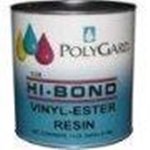
When it comes to marine-grade vinyl-ester resin, Hi Bond is a well-respected name among boaters and marine repair professionals. Hi Bond's vinyl-ester resin is a premium, high-quality, high-strength formula designed for use where the highest possible strength achievable is desired. Their gallon kit comes with hardener included, making it a convenient choice for hull repairs, tank linings, and structural fiberglass work.