



RV Water Holding Tank Treatment

 Representative Photo, actual item may vary

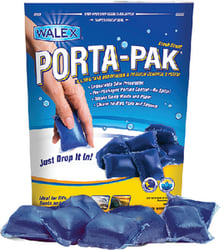

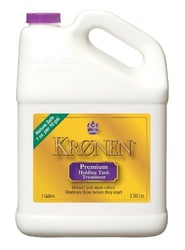
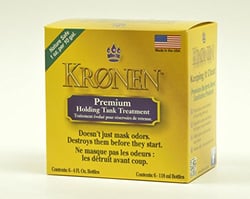
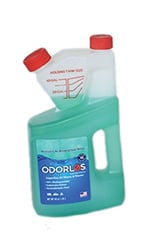
Pro Pack Packaging KHT003 Holding Tank Treatment 128 oz Bacteria-Based Deodorizer


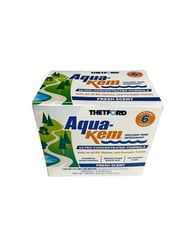
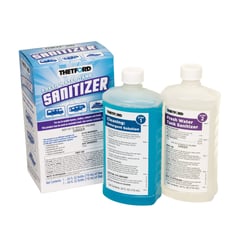

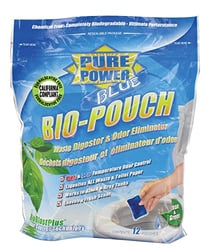
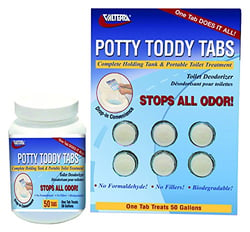
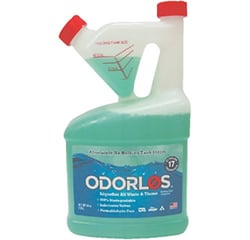
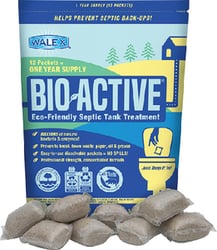

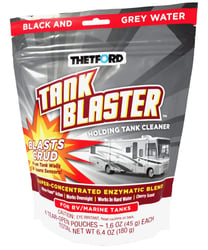
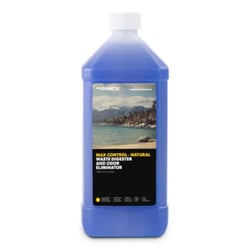

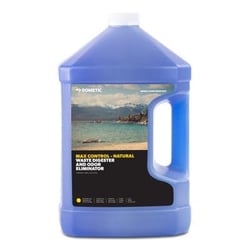
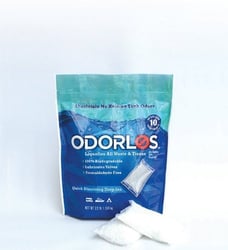
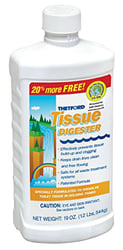
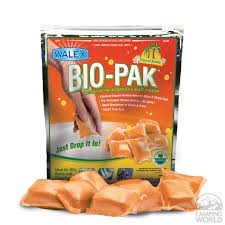
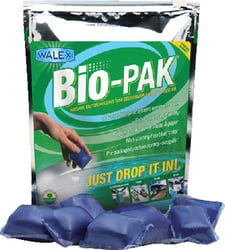
Walex Products BIOTROPBG Bio-Pak Tropical Breeze RV Holding Tank Deodorizer 10-Pack
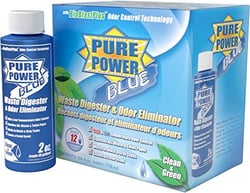
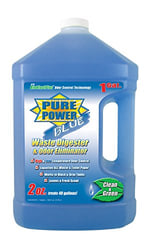
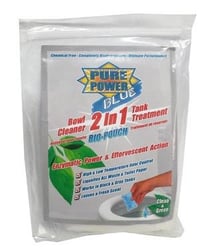
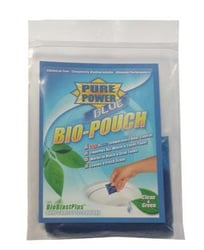
Valterra V23017 Pure Power Blue Waste Digester & Odor Eliminator 4 oz Bottles 6-Pack

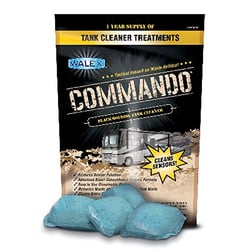
Walex Products CMDOBG Commando Black Holding Tank Cleaner 4-Pack Dissolvable Packets
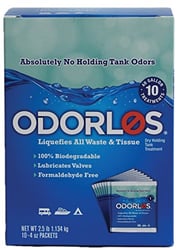
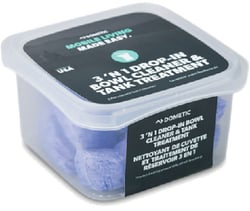
Dometic 9108833255 3-in-1 RV Toilet Bowl Cleaner & Holding Tank Treatment, 12 Pack
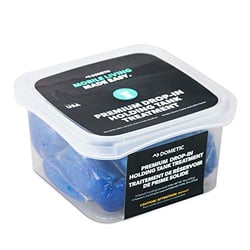
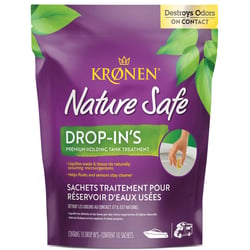
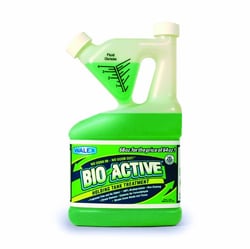
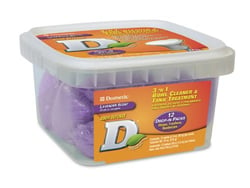
Dometic D1112001 3-in-1 RV Toilet Bowl Cleaner & Holding Tank Treatment 12 Count
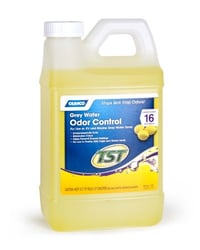
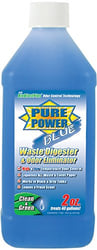
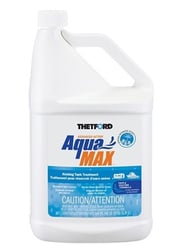
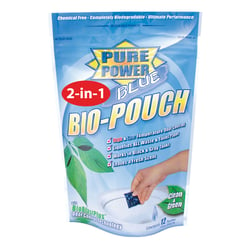

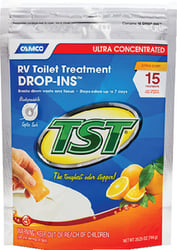

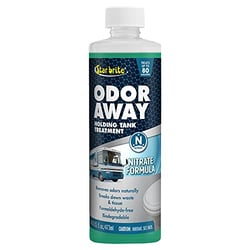
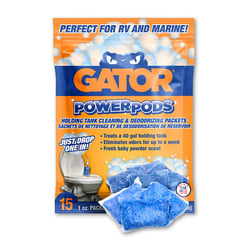
Duraflex 21889 Gator PowerPod RV Black & Gray Water Waste Tank Treatment - 15 Count

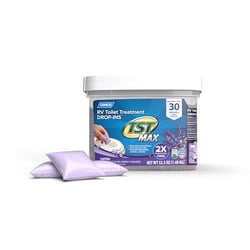
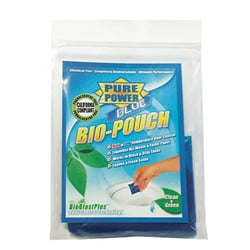
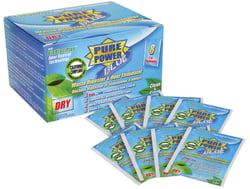
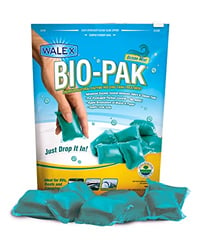
Walex Products BIOOCEANBG Porta-Pak Ocean Mist Holding Tank Deodorizer 10-Pack
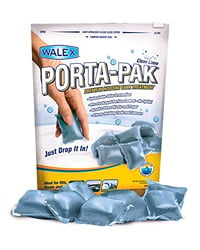
Walex Products PPRV10CLEAN Porta-Pak Clean Linen Holding Tank Deodorizer 10-Pack
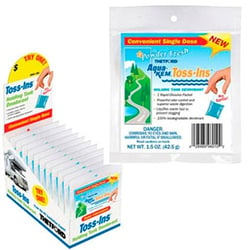
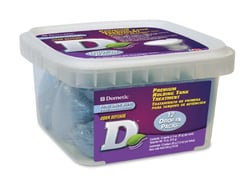
 Representative Photo, actual item may vary
Pro Pack Packaging KHT001 Holding Tank Treatment 32 oz Bacteria-Based RV Marine Septic
Why RV Holding Tank Treatment Matters
Holding tanks are one of the most critical — and most overlooked — systems in any RV. RV water holding tank treatments keep those systems functioning cleanly and reliably, whether you're weekend camping at a full-hookup site or boondocking deep in the backcountry for a week at a time.
Most RVs contain three distinct tanks: a freshwater tank for potable water used in drinking, cooking, and showering; a gray tank that collects wastewater from sinks and showers; and a black tank that holds waste from the toilet. Each presents its own maintenance challenges. Without regular treatment, holding tank products help prevent the buildup of solid waste, the development of foul odors, clogged plumbing lines, and malfunctioning tank-level sensors — problems that can turn any camping trip into a serious headache.
How Holding Tank Treatments Work
Today's holding tank products fall into several distinct categories, each with different strengths. Understanding which type fits your RVing style is key to choosing the right solution:
- Enzyme-based treatments use natural enzymes to break down waste and reduce the size of solids, which helps prevent clogs in tank walls and plumbing lines. However, enzymes alone typically do little to eliminate odors.
- Bacterial treatments introduce beneficial aerobic bacteria to the tank, which break down waste and naturally suppress odors by producing carbon dioxide and water rather than noxious byproducts. Their effectiveness can diminish in high temperatures or very low-water camping situations.
- Mineral/chemical treatments use compounds like calcium nitrate or sodium percarbonate to neutralize odors rapidly. These are particularly effective for hot-weather or low-water scenarios, though they offer less help with actual waste breakdown on their own.
- Combination formulas blend multiple approaches — bacteria, enzymes, and mineral compounds — to simultaneously address waste digestion and odor control across a range of conditions.
Treatments come in a variety of formats — liquids, drop-in pods, granular powders, and pre-measured packets — giving you the flexibility to choose what's most convenient for your setup. Regardless of which format you choose, using adequate water in your tanks remains one of the most important factors for effective treatment performance.
Top Brands in RV Holding Tank Treatment
Camco is among the most widely trusted names in RV sanitation, offering their popular TST line of treatments in liquid, drop-in pod, and concentrated forms. Their formaldehyde-free, USA-made formulas are designed to control odors for up to seven days while breaking down waste and tissue — and are safe for septic systems and the environment.
Thetford has long been a benchmark brand for RV sanitation, with their Aqua-Kem and Aqua Bio product lines serving millions of RVers. Thetford's holding tank treatments are engineered as 3-in-1 products, functioning as deodorizer, waste digester, and tank cleaner in a single application.
Walex Products specializes in convenient, pre-measured drop-in formats like their Porta-Pak and Bio-Pak lines — formaldehyde-free, fast-dissolving solutions that provide strong odor control and waste digestion for both black and gray tanks without any measuring or mess.
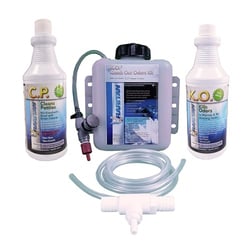
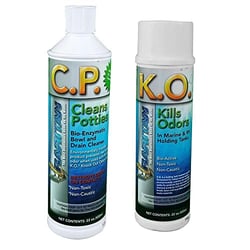
Raritan Engineering brings a marine-grade approach to RV holding tank care, offering treatments engineered to meet the demanding standards of both the boating and RV industries — a strong choice for combination RV and marine users who need versatile, heavy-duty solutions.
Valterra rounds out the top tier with their Pure Power Blue line, a highly concentrated bio-active formula designed to break down waste, tissue, grease, and soap scum across both black and gray tanks, leveraging a modern organic formula with proprietary odor control technology.
Choosing the Right Treatment for Your RVing Style
The best holding tank treatment is the one that matches how and where you camp. Full-hookup campers who dump frequently have different needs than extended boondockers who may go days without access to a dump station. Consider your typical water usage, ambient temperatures, tank size, and how often you can empty your tanks — then match those factors to the treatment type and format that will work hardest for you.