



De-Icers
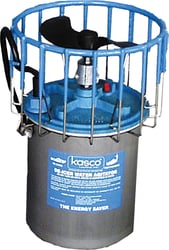

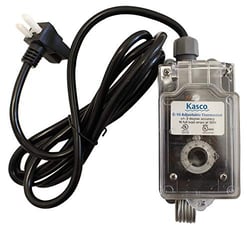
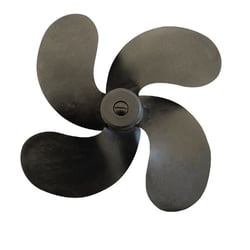
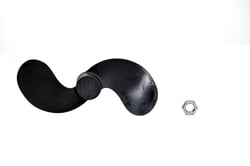
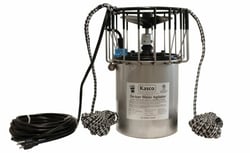
 Representative Photo, actual item may vary
 Representative Photo, actual item may vary
What Are Marine De-Icers and Why Do You Need One?
When winter tightens its grip on your waterfront, ice doesn't just look threatening — it is. Ice expansion and movement are among the most destructive forces a dock, boat lift, or marina can face. From cracked hulls and lifted pilings to shearing dock supports, the freezing and expansion of water can cause catastrophic and expensive damage. Marine de-icers are the frontline defense that keeps that threat at bay.
Marine de-icers work on a deceptively simple principle: warmer water naturally sinks to the bottom of a body of water, hovering around 39°F (4°C) even in the coldest winters. A de-icer uses a submerged motor and propeller to draw that warmer bottom water up to the surface, where it disrupts ice formation and melts any existing ice. The result is a maintained open-water zone that shields your waterfront structures from ice jacking, crushing pressure, and the relentless grinding of floating ice floes.
More Than Just Ice Prevention
The benefits of a marine de-icer extend well beyond protecting your dock investment. Open water allows vital oxygen exchange, which is critical for fish and other aquatic life during winter months. Heavy ice cover blocks sunlight, kills off underwater vegetation, and depletes oxygen levels — a phenomenon known as "winterkill." By maintaining even a small area of open water, a de-icer can help sustain a healthy aquatic ecosystem beneath the surface. In summer, the same water-circulation technology helps reduce stagnant conditions, combat foul odors, and improve overall water quality.
Choosing the Right De-Icer
Selecting the right de-icer comes down to a few key variables. Water depth is critical — de-icers perform best when installed in at least 6–8 feet of water, where there is ample warm bottom water to circulate. Motor size matters too, with units typically available in ½ HP, ¾ HP, and 1 HP configurations to suit different coverage areas and climate severities. Mounting options — including suspended rope systems, universal dock mounts, and horizontal floats — allow precise positioning to direct the water flow exactly where protection is needed most. It's also wise to install your de-icer in fall, before ice has formed, as installation becomes considerably more difficult once freezing begins.
Optional thermostat and timer control panels let you automate operation, turning the unit on only when temperatures approach freezing — saving energy without compromising protection. Always ensure your power cord is long enough to reach the outlet directly; extension cords can reduce efficiency and potentially damage the unit.
Kasco Marine De-Icers
Kasco Marine is widely regarded as the benchmark in marine de-icing technology. With over 50 years of continuous engineering refinement, Kasco's D-Series de-icers are built for demanding real-world conditions — from residential docks to full commercial marinas. Their units are ETL approved to UL and CSA safety standards, feature corrosion-resistant stainless steel construction, and include built-in thermal overload protection for worry-free operation. Whether you're protecting a single boat slip or an entire harbor, Kasco offers a trusted, proven solution.