



4300 Control Cables
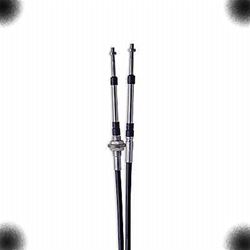

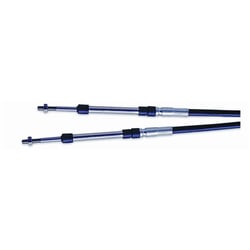
Seastar Solutions CCX43311 TFXtreme Control Cable 11 Foot Heavy Duty Marine Steering
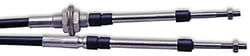

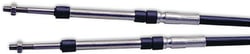
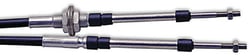
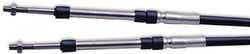
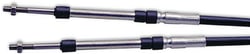
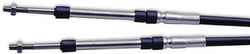
Teleflex CCX43317 SeaStar Solutions TFXtreme Heavy Duty Control Cable Assembly 17ft
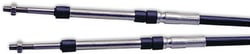
What Are 4300 Control Cables?
4300 series control cables are heavy-duty mechanical cables used in marine and RV applications to transmit movement from a helm control lever directly to the engine or drive unit. Whether you're managing throttle position, shifting between forward and reverse, or controlling a jet drive diverter, these cables serve as the critical mechanical link between the operator and the powertrain. 4300 control cables are a step up in durability and load capacity compared to the lighter-duty 3300 series, making them the go-to choice for high-performance and commercial-grade installations.
How 4300 Control Cables Work
At their core, control cables consist of an inner wire or splined core that slides within a protective outer casing. When you push or pull a throttle or shift lever at the helm, that motion travels through the cable with minimal friction loss and is translated precisely at the engine end. 4300 series cables are engineered for heavy-duty use, featuring up to 3 inches of nominal travel and a 5-inch minimum bend radius — specs that make them well-suited for longer runs and more complex routing through a vessel's hull.
The internal construction matters enormously. Premium 4300 cables typically feature a splined or ridged core design that minimizes the number of contact points with the liner, reducing friction and ensuring smooth, nearly lost-motion-free operation even in the longest and most complex cable routings. Outer casings are commonly made from high-density polyethylene (HDPE) to resist UV exposure, saltwater corrosion, chemicals, and the constant mechanical stress of life on the water.
Common End Fitting Configurations
One of the most important considerations when selecting a 4300 cable is its end fitting configuration. The two primary variants you'll encounter are:
- 4300BC / 43BC: Features one bulkhead fitting and one clamp fitting, with 1/4-28 threaded terminals at each end. This is commonly used where a cable penetrates a bulkhead on its way to the drive unit.
- 4300CC / 43CC: Features a clamp-type fitting at both ends, also with 1/4-28 threaded terminals. This style is available in several configurations that can eliminate the need for adapter kits in many installations.
Both configurations are considered universal-type cables, designed to fit a wide range of aftermarket engine controls as well as OEM control units from manufacturers such as BMW and Chrysler, among others.
Applications: Where 4300 Cables Are Used
The 4300 series is specified for demanding environments. Common applications include inboard engines, sterndrive systems, and jet drive installations — including forward/reverse and diverter cable applications on jet boats. The cables are also found in RV mechanical control systems wherever a robust push-pull cable interface is needed. Their heavy-duty construction makes them recommended for high-use and high-operating-load scenarios where a lighter cable would wear prematurely or introduce unwanted play.
How to Choose the Right 4300 Control Cable
Getting the correct cable for your application comes down to a few key factors:
- Cable length: Measure your routing carefully, following the actual path the cable will take — not a straight-line distance. Many 4300 cables are available in 1-foot increments to allow precise fitment.
- End fitting type: Determine whether your engine and control system require BC (bulkhead/clamp) or CC (clamp/clamp) style fittings before ordering.
- OEM vs. aftermarket compatibility: Check your engine manufacturer's specifications to confirm the cable type (4300/43BC or 4300CC) that is called out for your system.
- Replacement indicators: Stiffness, increased resistance at the lever, delayed throttle response, or visible jacket damage are all signs a cable is due for replacement.
Choosing a quality, marine-grade 4300 control cable with proper corrosion resistance is an investment in safety and reliability — smooth, accurate throttle and shift response is fundamental to confident boat handling in any conditions.