



Epoxy Putties & Putty
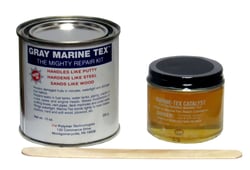

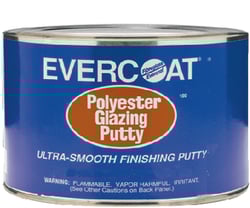

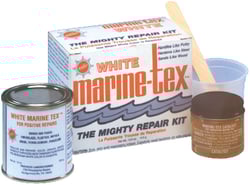
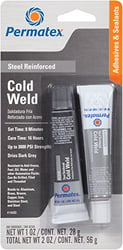

 Representative Photo, actual item may vary


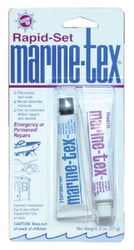
What Is Epoxy Putty and Why Does It Matter for Marine & RV Repairs?
Whether you're patching a cracked hull, sealing a fuel tank leak, or restoring rotted wood on your RV, epoxy putty is one of the most versatile and dependable repair materials you can keep on hand. Epoxy putties are two-part compounds — a resin and a hardener — that chemically react when mixed together to form a hard, durable, waterproof bond. Their thick, moldable consistency means they won't sag or drip, even when you're working on vertical surfaces or overhead areas.
Once cured, marine and RV-grade epoxy putty forms a dense, waterproof bond that resists saltwater, UV exposure, vibration, and impacts — making it an essential item for anyone who spends time on the water or the road. Unlike liquid epoxies, putty stays where you put it, allowing you to fill gaps, rebuild contours, and create structural repairs with precision.
Common Uses for Epoxy Putty in Marine & RV Applications
The range of repair jobs that epoxy putty can handle is impressive. Boaters and RV owners rely on it for tasks including:
- Repairing cracks and holes in fiberglass hulls and decks
- Patching metal fuel tanks, water tanks, and piping without dangerous welding
- Restoring rotted or damaged wood on transoms, stringers, and cabin structures
- Filling gouges, chips, and screw holes in wood, metal, ceramic, and fiberglass
- Reinstalling loose or stripped fasteners
- Emergency on-the-water fixes, including some underwater applications
One of the biggest advantages of epoxy putty for field repairs is simplicity. Most formulations can be kneaded by hand until the two color components blend into a uniform shade — a reliable signal that the mix is ready — then pressed directly onto the repair surface. No measuring syringes, no mixing cups required. This hands-on approach makes epoxy putty accessible even to first-time DIYers.
Key Considerations When Choosing Epoxy Putty
Not all epoxy putties perform the same way in every environment. A few factors worth considering before you buy:
- Surface compatibility: Most marine putties bond well to wood, fiberglass, and metal, but may not adhere to polyethylene or polypropylene plastics. Always check the product specifications.
- Working time and cure time: Some formulations offer only a 5-minute window before the putty begins to set, while others provide 30 minutes or more of working time. For complex repairs, choose a product with a longer pot life.
- Underwater capability: If you need an emergency repair below the waterline, look specifically for putties rated for underwater application.
- Temperature requirements: Most epoxy putties require a minimum ambient temperature (commonly 55°F) during application and throughout the curing period to achieve full strength.
- Post-cure workability: Quality putties can be drilled, tapped, sanded, filed, and painted after curing, letting you complete a professional-looking finish.
Top Brands in Epoxy Putties & Putty
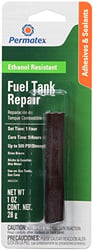
Permatex is a trusted name in chemical repair solutions, and their epoxy putty lineup reflects that reputation. Their Fuel Tank Epoxy Putty is a hand-kneadable, two-part stick specifically engineered for permanent repairs on metal fuel tanks and containers, offering resistance to fuels and most solvents — an important property for marine and RV applications where fuel contact is unavoidable.
Boat Life brings marine-specific expertise to their repair putty offerings. Their Fix Repair Putty is a non-sagging compound designed to cure like steel, and it's formulated to work even in wet or underwater conditions — a key advantage for boaters who need a reliable fix when hauling out isn't immediately possible.