



Mooring Hooks

What Are Mooring Hooks?
When it comes to securing your boat at a mooring buoy, dock, or pier, having the right hardware makes all the difference between a smooth, confident maneuver and a stressful, potentially dangerous situation. Mooring hooks are purpose-built marine fasteners that allow boaters to quickly and reliably attach their vessel to a mooring system — whether that's a buoy in an open-water mooring field, a cleat on a dock, or a ring at a lock or jetty.
Unlike simply looping a line around a cleat, a dedicated mooring hook creates a fast, positive connection that can be engaged or released with minimal effort — even when working solo, in choppy water, or from a boat with high freeboard. Mooring hooks are especially valuable when approaching a mooring buoy at speed or in crosswinds, where every second counts and fumbling with lines is not an option.
How Mooring Hooks Work
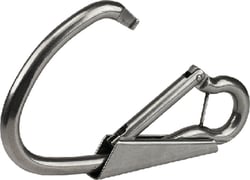
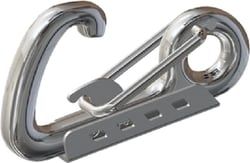
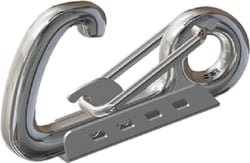
At their core, mooring hooks act as the critical interface between your dock line or pennant and a fixed mooring point such as a buoy ring, cleat, bollard, or piling. Many designs feature a spring-loaded or latch-style closure that snaps shut once the line or ring is captured, preventing accidental release while the vessel is secured. Some advanced models use a remote-release mechanism, allowing the operator to disengage the connection from on deck without leaning over the rail.
As part of a broader mooring system — which typically includes a permanent seabed anchor, rode (chain or rope), and a floating buoy — the mooring hook is often the last link in the chain, and the one that crew members interact with most directly. Getting this component right reduces wear on lines and cleats, minimizes the risk of injury from slippery or fouled mooring lines, and makes every arrival and departure safer and more efficient.
Types of Mooring Hooks to Consider
- Boat Hook-Mounted Hooks: These attach to the end of a standard boat hook pole, extending your reach to grab buoy rings or dock eyes from a safe distance aboard the vessel.
- Fixed Dock Hooks: Typically made from stainless steel rod, these are installed at fixed positions on dock edges, pilings, or lock walls for hands-free line capture.
- Quick-Release Mooring Hooks: Designed for commercial or high-traffic applications, these allow a mooring line to be released rapidly under load — a critical safety feature in surge-prone or emergency situations.
- Carabiner-Style Hooks: Spring-gate or key-lock carabiner designs offer a large opening for easy line capture and a secure, locking closure once engaged.
Materials and Durability
Marine environments are unforgiving to hardware. Salt water, UV exposure, and constant mechanical stress demand materials that can take the punishment. The best mooring hooks are manufactured from marine-grade stainless steel (typically 316 or A4 grade), which resists corrosion even in full saltwater immersion. Some lighter-duty or corrosion-immune applications call for reinforced polyamide (nylon) or carbon fiber-reinforced composites, which combine low weight with excellent chemical resistance.
Choosing the Right Mooring Hook
When selecting a mooring hook, consider your boat's size and freeboard, the typical mooring conditions you encounter (calm marina versus exposed anchorage), and whether you'll be operating solo or with crew. Larger vessels and those operating in more demanding conditions benefit from higher break-load ratings and remote-release capability. Smaller boats on calm inland waters may be well-served by a simple, lightweight hook-and-pole combination. Always match the hook's load rating to the working loads your mooring system is expected to handle.