



Radar Reflectors

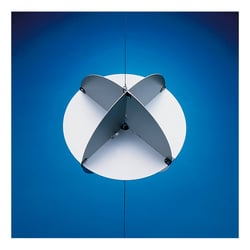
Davis Instruments 152 EchoMaster Radar Reflector with Marine Grade Aluminum Plates

What Are Marine Radar Reflectors?
A radar reflector is one of the most fundamental — and often overlooked — pieces of safety equipment a boater can carry. Radar works by sending out signals that bounce off objects and return to the sending vessel's display. The problem is that many small, recreational boats simply don't produce a strong enough radar return to be reliably detected by approaching ships or other vessels. Radar reflectors solve this problem by dramatically amplifying a vessel's radar presence, making it appear as a clear, distinct target rather than background noise.
Why Your Boat May Be Invisible to Radar
The material and shape of a vessel have a major impact on its radar detectability. Fiberglass and wooden boats lack natural radar reflectivity, so a radar reflector significantly improves how these boats appear on radar screens. Even metallic structures like rounded masts tend to scatter signals rather than reflect them cleanly back toward the source. The result is that a substantial vessel can appear as a mere blip — or vanish entirely — from another vessel's radar display, especially in challenging conditions like fog, heavy rain, or night navigation.
Passive vs. Active Radar Reflectors
Radar reflectors come in two main varieties. Passive reflectors use intersecting metal plates arranged in specific geometric patterns to return incoming radar signals back toward the source without requiring any power source. Once mounted, a passive reflector requires no attention, no maintenance, and no electricity — it works when underway and at anchor. Active reflectors, also called Radar Target Enhancers (RTEs), are electronic devices that receive a radar signal, amplify it, and retransmit a much stronger return, significantly increasing the boat's apparent size on a radar screen — but they require onboard power to operate.
Key Shopping Considerations
When selecting a radar reflector, size matters more than almost any other factor. A reflector's radar cross section (RCS) — the measure of its ability to return radar energy, expressed in square meters — increases dramatically with physical size. Mounting height is equally critical: international guidelines generally recommend positioning a reflector at least 4 meters above the waterline to ensure it rises above the radar horizon of approaching vessels. For sailboats, which heel under sail, look for designs that maintain effectiveness at varying angles of heel.
- RCS (Radar Cross Section): Higher values mean better detection. The International Maritime Organization establishes 2.5 sq. meters as a minimum threshold.
- Mounting position: Height above the waterline directly determines how far away approaching vessels can detect you.
- Passive vs. active: Passive models are simple, maintenance-free, and cost-effective; active RTEs provide superior returns but need power.
- Compactness and stowage: Many designs disassemble and stow flat — ideal for smaller vessels with limited storage.
- Regulatory compliance: SOLAS regulations require vessels under 150 gross tons to carry a radar reflector "if practicable." Many other countries mandate reflectors on non-metallic vessels under 20 meters.
Top Brands in Marine Radar Reflectors
Davis Instruments is the most recognized name in marine radar reflectors for recreational boaters. Based in Hayward, California, Davis has spent decades developing practical, high-quality marine safety products. Their flagship Echomaster™ line features marine-grade anodized aluminum plates that deliver 12 square meters of radar cross section, meeting U.S. Coast Guard requirements for lifeboat and life raft radar reflectors under SOLAS 74/83. The Echomaster's design allows it to be assembled around a backstay or wire rigging, and windage holes reduce aerodynamic drag — thoughtful details that reflect Davis's deep understanding of on-the-water use. For boaters who want a compact backup option, the Davis Emergency Radar Reflector disassembles and stows flat, popping open to full size in seconds when needed.