



Simrad Sounder Modules
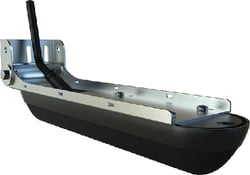

What Are Sounder Modules and Why Do They Matter?
For serious anglers and offshore mariners, a dedicated sounder module is the engine behind a world-class fish-finding setup. Rather than relying solely on the built-in sonar of a multifunction display (MFD), an external sounder module delivers dedicated processing power, expanded transducer support, and the flexibility to scale your system as your fishing ambitions grow. A sounder module can be used to add sonar capabilities to a modular display system, or to provide additional sonar capabilities on multifunction displays or fishfinders with built-in sounder technology.
How Sounder Modules Work
Echosounders calculate water depth by measuring the time it takes for an acoustic signal to reach the bottom and the echo to return to the vessel. Sounder modules take this fundamental technology further — transmitting acoustic pulses through a paired transducer, interpreting the returning echoes, and translating that raw data into a detailed on-screen picture of everything beneath the hull. The result is a real-time view of water depth, bottom composition, structure, and fish targets.
Modern sounder modules are built around CHIRP (Compressed High-Intensity Radar Pulse) technology. By continuously sweeping through a range of frequencies, CHIRP exceeds many common limitations of single-frequency broadband sonar — offering substantially less noise and greater target separation, such as the ability to discern individual baitfish within a school, or to see multiple closely-spaced game fish that may appear as one target on a traditional broadband sounder.
Standalone Modules vs. Built-In Sonar
Entry-level MFDs often include a built-in sonar channel, which is perfectly capable for inshore or recreational use. However, when fishing in deeper offshore waters or targeting multiple species at once, a dedicated sounder module provides critical advantages. If you're fishing in deeper waters, you may benefit from a high-performance sonar box — a dedicated module can make it easier to fish in deep water, letting you monitor multiple depth ranges simultaneously and helping you locate schools of fish.
Multi-channel modules push the capability even further. A three-channel sounder module features fully independent sonar channels, delivering true simultaneous coverage of up to three different depth ranges — allowing you to connect multiple single-channel transducers or pair a dual-channel transducer with a single-channel unit, with different frequency ranges viewable simultaneously in a split-screen layout on a single display.
Key Features to Look For
- CHIRP Technology: CHIRP uses frequency-swept pulses to provide improved target resolution and noise rejection compared to traditional single-frequency sonar.
- Independent Sonar Channels: Multiple independent channels let you scan different depths at the same time without sacrificing performance at any range.
- Transducer Compatibility: CHIRP transducers are available in a range of frequencies to suit different depths and applications. Verify that a module supports the transducer type and power level your vessel requires.
- Network Connectivity: High-speed Ethernet connectivity enables easy installation almost anywhere on board, on vessels of any size.
- MFD Integration: Some displays let users view up to four sonar sources on a single screen from networked modules, offering ultimate sonar flexibility.
Choosing the Right Sounder Module
Matching your sounder module to your fishing style and target species is essential. Inshore anglers focused on shallow-water species have different needs than offshore anglers targeting deep-water game fish, where transducers up to 3kW can be supported via high-end sonar modules to maintain signal strength at extreme depths. Consider the number of transducer ports, maximum supported wattage, CHIRP compatibility, and how the module connects to your existing display before making a purchase.