



Thrusters


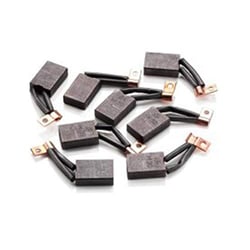
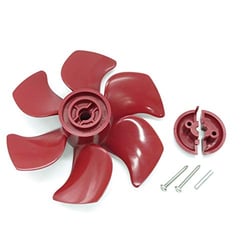
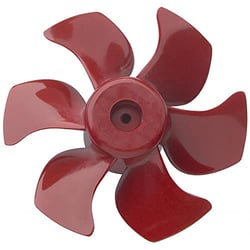
Vetus SET0088 6-Blade Replacement Propeller 185mm for BOW50/60/75/80/95 Thrusters
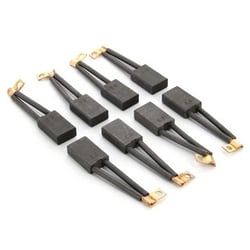
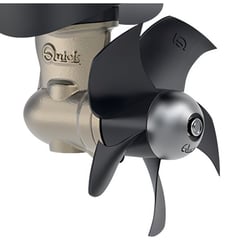
Quick FVSGEL185L05A00 Replacement Propeller Left Hand 5-Blade for BTQ 185 Bow Thruster


What Are Marine Thrusters?
Docking a boat in a crowded marina, fighting a crosswind, or squeezing into a tight slip is one of the most skill-demanding moments any boater faces. Marine thrusters — most commonly bow thrusters and stern thrusters — solve this challenge by giving captains a crucial tool: lateral control. Thrusters work by spinning a propeller inside a submerged tunnel or housing mounted athwartships near the bow or stern of the vessel, pushing the boat sideways independent of the main engine or rudder.
With a thruster installed, even a single-handed skipper can hold position against a current, crab sideways into a slip, or pivot in place — maneuvers that would otherwise require significant experience, a helpful crew, or ideal conditions. Beyond convenience, thrusters meaningfully reduce the risk of hull damage, dock collisions, and crew injuries during close-quarters maneuvering.
Bow Thrusters vs. Stern Thrusters
Most recreational vessels start with a bow thruster, which provides the greatest leverage for rotating the vessel since it acts at the furthest point from the pivot. A stern thruster adds a second axis of control, allowing a captain to translate the boat nearly sideways — ideal for Mediterranean-style mooring or extremely tight marina berths. Some boaters install both for maximum maneuverability and redundancy.
Key Factors When Choosing a Thruster
- Thrust output (kgf): Matched to your vessel's size, displacement, and windage. Undersizing is the most common installation mistake.
- Power source: DC electric thrusters (12V or 24V) are the most common on recreational boats; hydraulic thrusters suit larger commercial or working vessels needing continuous run time.
- Tunnel diameter: Must fit within the hull geometry at the bow; a larger tunnel generally means more efficient thrust.
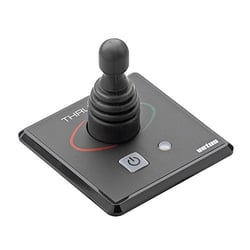
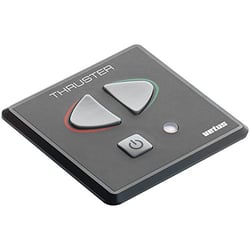
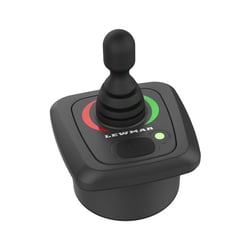
- Control style: On/off toggle, proportional joystick, or fully digital CAN bus systems each offer different levels of finesse.
- New install vs. retrofit: Some systems are designed to share tunnel dimensions across brands, making upgrades straightforward.
Top Thruster Brands
Vetus is one of the most recognized names in the marine thruster market. Vetus offers a broad lineup spanning standard DC thrusters all the way up to hydraulic models, covering vessels from about 24 to over 100 feet. Their flagship BOW PRO series features brushless induction motors controlled via a patented MCV motor controller, delivering proportional control, built-in over-temperature and low-battery protection, and extended run times compared to conventional DC units.
Lewmar brings decades of custom thruster engineering to the recreational boating market. Their TT (Tunnel Thruster) propeller design is engineered to achieve perfectly even thrust in both directions — a key advantage when alternating between pushing off a dock and pulling toward a slip. Lewmar's electric range covers power outputs from 1.5 kW to 10.8 kW, suiting boats up to approximately 21 metres, and all models undergo extensive testing for smooth, quiet operation.
Quick is an Italian-headquartered manufacturer that has built a strong reputation in the yacht and superyacht segments. Their thruster lineup includes DC, AC, hydraulic, and retractable models, and their newer QSY series uses permanent magnet synchronous reluctance motors for improved efficiency and extended continuous run times. Quick also supports integration with major engine joystick systems, making their thrusters a natural fit on modern helm-control platforms.