



Circuit Breakers
 Representative Photo, actual item may vary

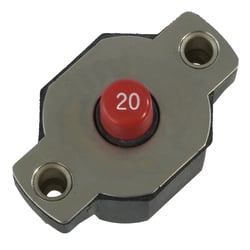
 Representative Photo, actual item may vary
Why Circuit Breakers Matter in Boats and RVs
A circuit breaker protects the wiring in an electrical system. When current exceeds what a conductor can safely carry, the breaker trips and opens the circuit before insulation overheats and a fire can start. Unlike a fuse, a breaker can be reset after the fault is cleared, and many double as a convenient on/off switch for a circuit. In marine and RV systems, where vibration, moisture, salt air and large battery banks are part of daily life, choosing the right breaker is a core safety decision rather than an afterthought.
Types of Circuit Breakers
Most breakers in this category fall into a few families. Understanding the differences makes it easier to match a breaker to your circuit:
- Thermal breakers use a bi-metal element that bends as it heats, tripping on sustained overload. They tolerate brief inrush surges, which suits motors and windlasses.
- Magnetic-hydraulic breakers trip based on current rather than heat, so their rating is less affected by ambient temperature. They are common in AC/DC distribution panels.
- Push-button reset breakers are compact, low-cost options for accessory circuits such as pumps, electronics and lighting.
- Panel-mount and surface-mount breakers serve different installations: panel-mount units sit in a switch panel for everyday access, while surface-mount units are used near batteries and inverters for main circuit protection.
What to Consider When Choosing
Start with the wire gauge and the load: the breaker must trip before the wire is damaged, not after. Check the maximum DC voltage rating, especially on 24V or 48V systems, and confirm the interrupt capacity is high enough for the available fault current from your battery bank. Look for marine-rated construction, ignition protection for use in engine compartments or around fuel vapors, and water-resistant sealing. Features such as a trip-free design, which prevents the breaker from being held on during a fault, add an extra margin of safety. Always verify amperage against the equipment manual rather than guessing.
Top Brands in Circuit Breakers
Blue Sea Systems is a widely recognized name in marine electrical components, with a broad range of thermal and magnetic breakers including A-Series toggle, 285-Series surface-mount and 187-Series models designed around ABYC marine electrical standards.
Egis Mobile Electric focuses on circuit protection built for vibration, moisture and corrosion, with 87 Series and 285 Series breakers that offer sealed construction, stainless hardware and ratings up to 48V DC.
Rig Rite supplies practical circuit protection for boat owners wiring accessories, trolling motors and fishing-oriented electrical systems.
Lewmar is a deck hardware specialist whose slow-blow breakers are matched to its electric windlasses and winches, providing the overload protection those high-current motors require.
Installation and Maintenance Tips
Keep terminals clean and tight, use properly crimped marine-grade lugs, and protect exposed studs with boots or covers. Periodically cycle breakers and inspect for corrosion or heat discoloration. A breaker that trips repeatedly is signaling a problem in the circuit; investigate the cause rather than upsizing the breaker.