



Penetrating Lubricants

What Are Penetrating Lubricants and Why Do They Matter?
Penetrating lubricants are one of the most essential maintenance products for any boat owner, marine mechanic, or outdoor equipment enthusiast. Unlike standard greases or heavy oils, penetrating lubricants are formulated with low-viscosity solvents designed to seep deep into microscopic metal pores, threaded fasteners, hinges, and corroded assemblies — dissolving rust and freeing stuck or frozen parts without requiring disassembly. In the marine environment especially, where salt water, moisture, and humidity attack metal surfaces relentlessly, a reliable penetrating lubricant is truly a dockside essential.
The primary jobs of a penetrating lubricant are threefold: to penetrate tight crevices and corroded surfaces, to displace moisture that leads to electrical failures and corrosion, and to leave a protective film that guards metal against future rust and oxidation. Many formulas also double as long-term corrosion inhibitors, making a single application do the work of multiple products.
What to Look for When Choosing a Penetrating Lubricant
- Penetration depth: Low-viscosity formulas with high capillary action work their way into tightly fitted and rusted threads faster and more effectively.
- Moisture displacement: Critical for marine engines, outboards, and electrical connections exposed to water and salt spray.
- Residual protection: Some penetrants evaporate quickly and offer short-term lubrication, while others leave a lasting waxy or oily film for months of ongoing protection.
- Compatibility: Look for formulas safe on paints, plastics, rubber, vinyl, and electrical components — especially important in a boat's tight engine compartment.
- Application format: Aerosol sprays reach difficult angles and tight spaces; liquid bottles allow precise application to chains, cables, and small mechanisms.
Top Brands in Penetrating Lubricants
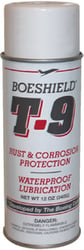
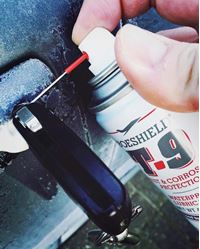
Boeshield T-9 is one of the most respected names in the category. Originally developed and licensed by The Boeing Company, the T-9 formula uses a unique combination of solvent carrier and paraffin wax engineered to penetrate crevices deeply, displace moisture, and leave a clean, waxy coating with lasting durability. Its waterproof formula withstands both saltwater and freshwater environments, making it a go-to choice for marine applications above and below deck.
LPS Lubricants brings decades of industrial expertise to the penetrating lubricant category. Their numbered product line — LPS 1, LPS 2, and LPS 3 — offers a graduated range from a dry, thin greaseless film ideal for delicate electrical and mechanical components, to a heavy-duty multi-purpose penetrant and corrosion inhibitor built for demanding marine and industrial environments.
CRC Industries has been a trusted name in marine maintenance chemicals for nearly 50 years. Their flagship 6-56 Multi-Purpose Lubricant resists water and salt spray, penetrates through rust and corrosion, and helps start wet engines — making it a staple in marine engine compartments. CRC also offers the Ultra Screwloose Super Penetrant for tackling the most stubborn frozen fasteners and corroded hardware.
BikeMaster rounds out the category with penetrating lubricant solutions geared toward powersports and recreational equipment maintenance, offering a reliable option for keeping mechanical assemblies and exposed metal components protected against corrosion and wear.